


In modern municipal water supply networks, industrial water treatment plants, HVAC chillers, and residential plumbing, reliable fluid isolation is paramount. Uncontrolled leakage or premature valve failure leads to system downtime, costly water loss, and severe infrastructure damage.
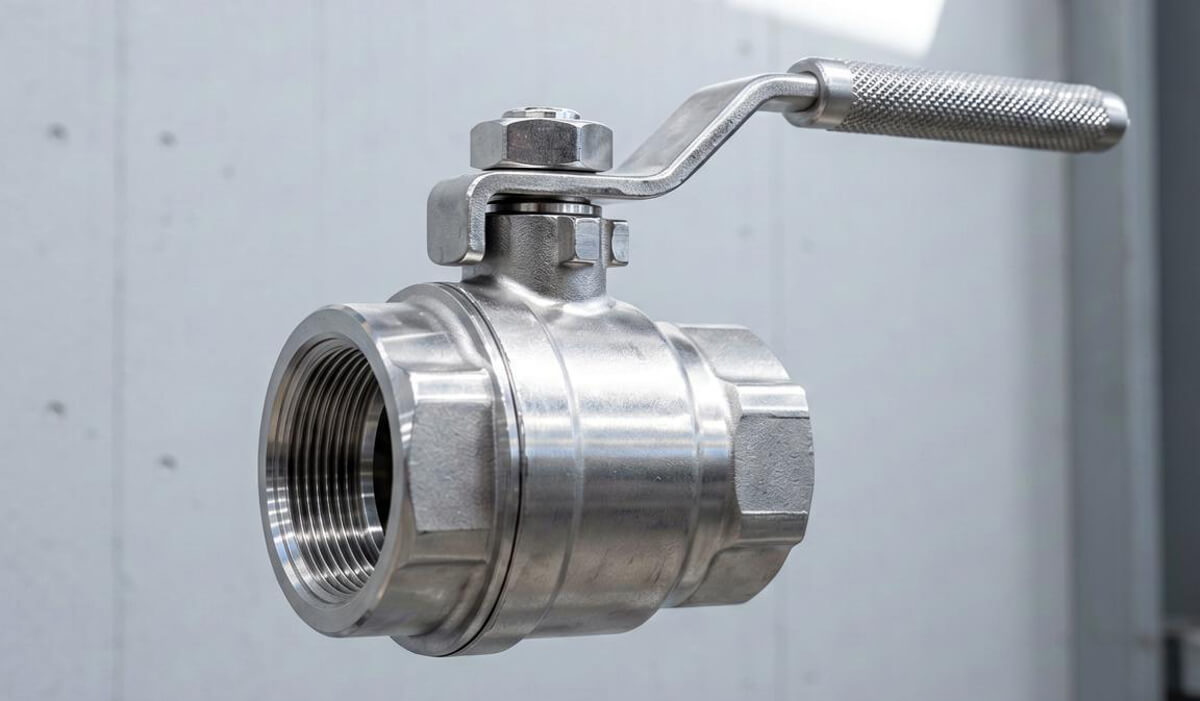
Among all quarter-turn valve designs, Ball Valves For Water applications are the undisputed industry standard for quick shut-off, low pressure drop (ΔP), and long-term zero-leakage performance.
This comprehensive guide covers:
- Operational mechanics
- Material selection criteria
- Pressure class comparisons
- Manufacturing standards
- A practical procurement checklist for sourcing from China
Whether you are a piping engineer, project manager, or global procurement specialist, this guide helps you select the right valve for critical water infrastructure.
1. What Are Ball Valves for Water Systems?
A Ball Valve is a quarter-turn rotational valve that uses a hollow, perforated, and pivoting sphere (the ball) inside a body to control flow.
Flow Logic – Open vs Closed Position
| Valve Position | Ball Bore Direction | Flow Condition | Sealing Mechanism |
|---|---|---|---|
| Open | Aligned with pipe axis | Full flow, minimal friction loss | No sealing pressure |
| Closed | Perpendicular to flow | Zero flow, bubble-tight shut-off | Elastomeric seats pressed against ball |
Core Benefits in Water Applications
- Bubble-Tight Shut-off: Soft seats (PTFE, EPDM, NBR) conform to the ball surface, ensuring zero leakage even under pressure fluctuations.
- Low Flow Resistance: Full-bore designs match pipe inner diameter (ID), delivering high flow coefficient (Cv) and minimal head loss compared to globe or gate valves.
- Rapid Operation: A 90° quarter-turn enables immediate emergency isolation during pipe bursts or system overhauls.
2. Key Construction Styles for Water Isolation
Choosing the right internal architecture depends on line pressure, pipe diameter, and installation constraints.
Floating Ball Valves
- Structure: The ball is supported only by two resilient seats. Under line pressure, the ball drifts slightly downstream, pressing against the downstream seat to form a seal.
- Best For: Small to medium pipelines (DN15–DN100 / NPS ½–4), municipal branch lines, and general industrial water distribution below Class 300.
- Advantages: Cost-effective, simple maintenance, widely available.
Trunnion Mounted Ball Valves
- Structure: The ball is mechanically fixed by an upper stem and a lower trunnion pin with heavy-duty bearings. Spring-energized seats are pushed against the anchored ball by line pressure.
- Best For: High-pressure municipal mains, water transmission pipelines (DN150–DN1000+ / NPS 6–40+), and automated emergency shutdown (ESD) stations requiring low operating torque.
- Advantages: Low torque even at high pressure, suitable for large diameters and actuation.
Quick Comparison Table
| Feature | Floating Ball Valve | Trunnion-Mounted Ball Valve |
|---|---|---|
| Size Range | DN15 – DN100 (NPS ½–4) | DN50 – DN1000+ (NPS 2–40+) |
| Pressure Class | Up to Class 600 | Up to Class 2500 |
| Operating Torque | Moderate | Low (with bearings) |
| Seat Design | Ball pushes seat | Seat pushes ball |
| Typical Application | Branch lines, HVAC | Transmission mains, ESD stations |
3. Material Selection Matrix for Water Service
Selecting the right metallurgy prevents dezincification, galvanic corrosion, and premature seal degradation.
Valve Body & Trim Material Options
| Material | Common Grade | Key Characteristics | Best Application |
|---|---|---|---|
| Bronze / Brass | C37700, C83600 (DZR) | Excellent corrosion resistance, dezincification-resistant | Residential potable plumbing, HVAC balance lines |
| Ductile Iron | EN-GJS-400-15, A536 | High tensile strength, cost-effective for large diameters | Municipal water distribution, raw water mains |
| Stainless Steel | ASTM A351 CF8M (316) | Superior pitting resistance, non-contaminating, durable | Deionized water, RO plants, chemical dosing |
| Carbon Steel | ASTM A105N, A216 WCB | Heavy-duty structural strength, high pressure-temperature rating | Industrial cooling loops, high-pressure boiler feed |
Seat & Seal Material Guide
| Seat Material | Temperature Range | Chemical Resistance | Typical Use |
|---|---|---|---|
| PTFE | –29°C to 180°C | Excellent (most chemicals) | General water, steam, aggressive fluids |
| EPDM | –40°C to 120°C | Good for water, dilute acids | Potable water, wastewater |
| NBR (Buna-N) | –30°C to 100°C | Good for oils, fuels | Cooling water with oil traces |
4. Engineering Comparison: Ball Valve vs Other Isolation Valves
| Feature | Ball Valve | Gate Valve | Butterfly Valve |
|---|---|---|---|
| Shut-Off Speed | Fast (90° quarter-turn) | Slow (multi-turn) | Fast (90° quarter-turn) |
| Sealing Performance | Bubble-tight (soft seated) | Metal-to-metal or resilient seat | Resilient seated (wafer/lug) |
| Flow Restriction (ΔP) | Very Low (full bore) | Very Low (full port) | Medium (disc in flow stream) |
| Space Footprint | Compact | Tall vertical clearance | Extremely narrow face-to-face |
| Water Hammer Risk | Medium (if closed instantly) | Very Low (slow closure) | Medium |
Engineering Tip: For systems sensitive to water hammer, pair your ball valve with a slow-closing actuator or install a surge anticipator valve downstream.
5. How to Choose the Right Ball Valve – 5-Step Decision Flow
Use this practical decision path for your next project:
6. Common Selection Mistakes to Avoid
| Mistake | Consequence | Solution |
|---|---|---|
| Choosing brass for high-chlorine water | Dezincification, pitting leaks | Use DZR brass or stainless steel |
| Oversizing the valve | Higher cost, poor throttling control | Match Cv value to system flow requirements |
| Ignoring actuator torque | Valve fails to open/close | Verify torque with supplier; include safety margin (1.2–1.5x) |
| No testing certificate | Site rejection, delay claims | Require API 598 or EN 12266-1 test reports with each shipment |
7. Partnering with a Certified China Ball Valve Manufacturer
When sourcing water isolation equipment for international municipal or EPC projects, choosing an experienced China ball valve manufacturer offers significant advantages in cost efficiency, manufacturing scale, and engineering customization.
Sourcing Quality Checklist for China Ball Valves
To ensure your China ball valve supplier meets global project specifications, verify the following credentials:
- ISO 9001 (Quality Management)
- API 6D (Pipeline Valves)
- CE/PED (European pressure equipment)
- WRAS or NSF/ANSI 61 (Drinking water safety)
Confirm every valve undergoes hydrostatic body and seat pressure testing per API 598 or EN 12266-1 before shipment.
Request EN 10204 3.1 chemical and mechanical inspection certificates for all forgings, castings, and ball trims.
Partner with a ball valves manufacturer that provides factory-installed pneumatic, electric, or hydraulic actuators with direct ISO 5211 mounting pads.
Typical Lead Time & Packaging
| Item | Standard Value |
|---|---|
| Standard valve lead time | 30–45 days |
| Custom actuator integration | +7–10 days |
| Export packaging | Plywood crates, seaworthy, with rust-preventive coating |
| Shipping documents | Commercial invoice, packing list, MTRs, test certificates, operation manuals |
8. Frequently Asked Questions (FAQ)
Q1: What is the difference between floating and trunnion ball valves?
A: Floating valves rely on line pressure to press the ball against the downstream seat – suitable for small diameters. Trunnion valves mechanically anchor the ball, reducing torque and enabling large-diameter, high-pressure service.
Q2: Can brass ball valves be used for drinking water?
A: Yes, but only if they are DZR (dezincification-resistant) grade and certified to NSF/ANSI 61 or WRAS. Standard brass may corrode in aggressive water.
Q3: How do I prevent water hammer with ball valves?
A: Use an actuator with adjustable closing speed (e.g., a hydraulic dashpot or a geared limit switch) to slow the 90° rotation, or install a surge tank/air vessel downstream.
Q4: What testing standards should I require for a China-made ball valve?
A: API 598 (USA) or EN 12266-1 (Europe) are the most common. Also request a hydrostatic shell test (1.5× rated pressure) and a seat leakage test (zero visible leakage for soft-seated valves).
Q5: Does full-bore or reduced-bore matter for water systems?
A: Full-bore provides maximum flow and minimal pressure drop – ideal for pump discharge and transmission lines. Reduced-bore is acceptable for branch lines where minor pressure loss is not critical.
Conclusion – Securing Your Water Infrastructure
From high-purity water treatment plants to large-diameter city transmission mains, specifying the right ball valves for water systems is critical to eliminating non-revenue water loss, lowering pumping energy costs, and guaranteeing uninterrupted fluid control.
Need expert support? Contact our engineering team for custom valve sizing, actuator selection, or to request a sample test report from our certified China factory.
Post time: Aug-22-2026