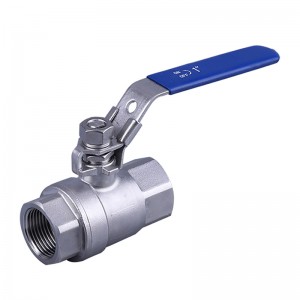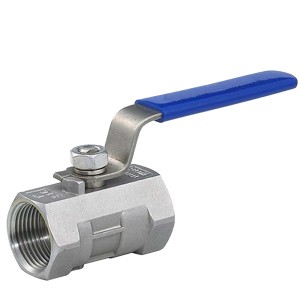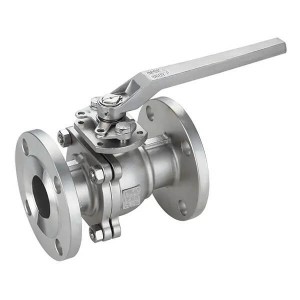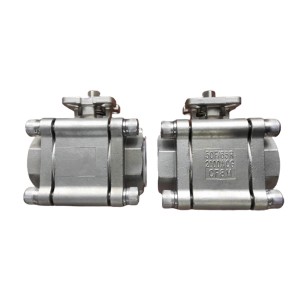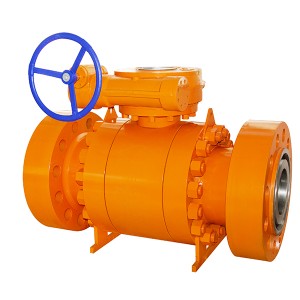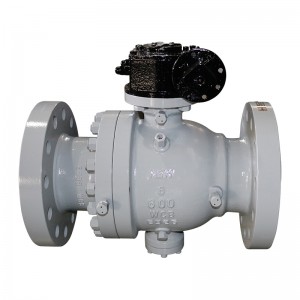


Floating Ball Valve
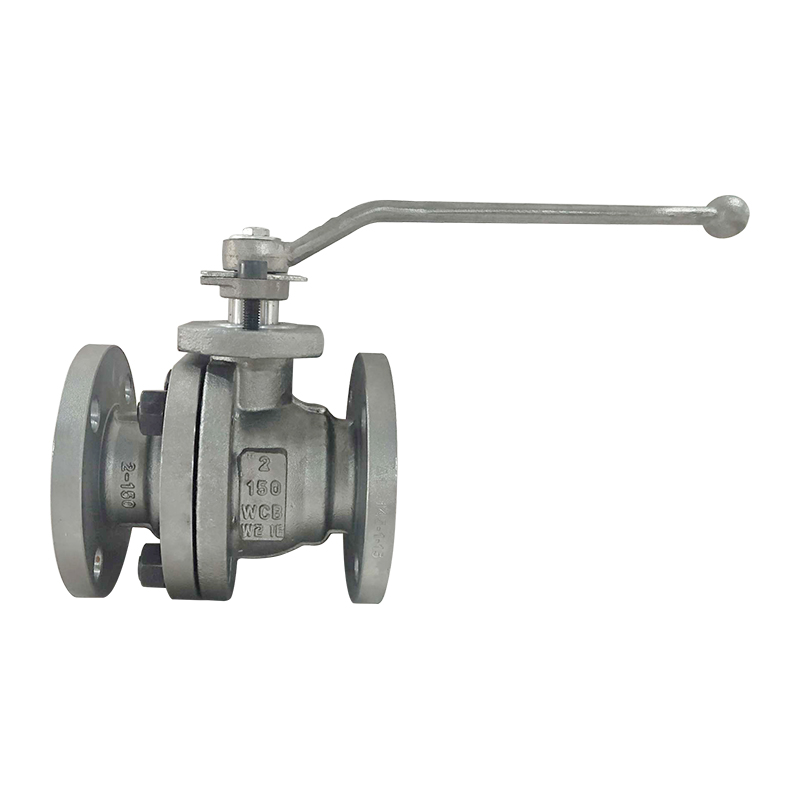
Floating Ball Valve Detail:
NSW Valve offers precision floating ball valves for Class 150-600 pipelines. API 608 & ISO 9001 certified. Materials: WCB, CF8, CF8M and Custom. Request quote
Floating Ball Valve: Precision Industrial Pipeline Control Valve
Wenzhou Newsway Valve Co., Ltd.(NSW Valve) | 10,000 m² Manufacturing Facility | 8,000 Tons Annual Valve Production Capacity | ISO 9001 / API 607 / CE-PED Certified
A floating ball valve is a quarter-turn on-off valve designed for medium and low-pressure piping systems. Its free-moving ball self-adjusts under line pressure, pressing tightly against the downstream seat to achieve bidirectional tight sealing. NSWValve has manufactured floating ball valves for over 20 years, serving municipal, chemical, power generation, and oil & gas industries with customizable materials, pressure classes, and structural configurations.
Product Overview
A floating ball valve is a high-versatility, dependable on-off control valve engineered for medium and low-pressure piping systems across general industrial, municipal, and energy sectors. Its core floating ball structure allows the valve ball to move freely under medium pressure, self-adjusting and closely fitting the valve seat to achieve full tight sealing. This unique self-sealing mechanism delivers consistent performance during frequent start-stop cycles, offering greater operational flexibility than traditional fixed ball valves.
Thanks to its streamlined structure, lightweight build, effortless operation, and low lifecycle maintenance costs, the floating ball valve has become one of the most popular and cost-effective pipeline control solutions for standard industrial piping systems. With over 20 years of valve manufacturing experience and a 10,000 m² factory equipped with advanced CNC machining and testing equipment, NSWValve engineers and produces high-precision floating ball valves with fully customizable materials, pressure classes, dimensions, and structural configurations. Our factory operates 5 production lines with an annual output capacity of 8,000 tons of valves, ensuring stable delivery and consistent quality for global end users.
Design & Manufacturing Standards
All NSWValve floating ball valves adhere strictly to globally recognized industrial design, manufacturing, and testing standards. Every production link from raw material screening to finished product processing follows standardized procedures to eliminate quality deviations and ensure industry-compliant product performance.
| Standard | Scope |
|---|---|
| API 608 | Floating ball valve design specification |
| ASME B16.34 | Pressure-temperature ratings |
| ASME B16.5 | Flange dimensions |
| ASME B16.10 | Face-to-face dimensions |
| API 598 | Valve inspection and testing |
| ISO 5208 | Industrial valve pressure testing (Rate A zero leakage) |
| ISO 9001 | Quality management system |
| API 607 | Fire-safe testing |
| ISO 15848-1 | Fugitive emissions performance |
API 608 specifies requirements for metal ball valves suitable for petroleum, petrochemical, and industrial applications, covering floating (seat-supported) and trunnion ball valve designs in nominal pipe sizes per ASME B36.10M. All NSW Valve floating ball valves are designed to this standard and tested in accordance with API 598 for shell hydrostatic pressure, seat tightness leakage, and overall air tightness.
To guarantee structural safety and ultimate sealing reliability in actual service, every finished floating ball valve undergoes a full set of rigorous factory tests:
• Shell hydrostatic pressure testing — verified at Class 150 (450 psi), Class 300 (1,125 psi), and Class 600 (2,250 psi) shell test pressures
• Seat tightness leakage testing — zero leakage to ISO 5208 Rate A and API 598 standards
• Overall air tightness testing — at 80 psi per API 598 requirements
Our standardized modular production processes deliver consistent product quality, precise dimensional tolerance, and full accessory interchangeability, effectively lowering equipment replacement frequency and overall operational and maintenance costs for clients. The NSWValve quality control system strictly follows the ISO 9001 standard, controlling product quality throughout the entire manufacturing process to ensure 100% qualified output.
Material Options for Diverse Working Media
Pipeline media and operating environments vary drastically across industries, making targeted material selection critical for valve stability and service life extension. NSWValve offers a complete portfolio of material options for floating ball valves, covering ordinary, weakly corrosive, and strongly corrosive working scenarios.
| Material Category | Grade | Typical Media | Key Characteristics |
|---|---|---|---|
| Carbon Steel | WCB (A216) | Water, natural gas, conventional oil | Stable performance at normal temperatures |
| Low-Temp Carbon Steel | LCB (A352) | Low-temperature pipelines | Excellent low-temperature toughness, prevents structural cracking |
| Stainless Steel | CF8 (A351) | Tap water, dilute acid, alkaline solutions | Outstanding oxidation resistance, prevents rust and contamination |
| Stainless Steel | CF8M (A351) | Weakly corrosive media | Superior corrosion resistance vs. CF8 |
| Duplex Steel | A890 GR.4A/GR.5A | Strongly corrosive media | Superior corrosion resistance and mechanical strength |
| High-Alloy | Inconel 625, Alloy C276 | Severely corrosive environments | Maximum corrosion resistance for chemical applications |
• Carbon Steel Series (WCB, LCB): Suitable for common non-corrosive media such as water, natural gas, and industrial conventional oil. WCB carbon steel performs stably under normal-temperature working conditions, while LCB low-temperature carbon steel features excellent low-temperature toughness and pressure resistance, specially optimized for low-temperature pipeline systems to prevent structural cracking and failure.
• Stainless Steel Series (CF8, CF8M): Ideal for weakly corrosive media including tap water, dilute acid, and alkaline solutions. CF8 and CF8M stainless steel materials boast outstanding oxidation and mild corrosion resistance, effectively avoiding rust formation, medium contamination, and valve component wear for long-term clean and stable operation. Emerson’s K-BALL Series 188, for reference, uses TFM 1600 as a default seat material with available CF8M/CF8 body materials, which is a common industry configuration.
• High-End Custom Materials: For harsh working conditions with strong corrosive media, we provide customized duplex steel (ASTM A890 GR.4A/GR.5A) and high-alloy material solutions including Inconel 625, Alloy C276, and super duplex. These premium materials deliver superior corrosion resistance and mechanical strength, significantly extending valve service life and ensuring reliable operation in complex chemical and industrial environments.
Working Conditions & Industrial Applications
Our floating ball valves are engineered for medium and low-pressure pipelines with standard pressure classes ranging from Class150 to Class600, adapting to normal and medium-temperature operating scenarios. The exclusive floating self-sealing structure is highly tolerant of frequent opening and closing operations, maintaining stable sealing performance even after long-term cyclic use.
| Parameter | Specification |
|---|---|
| Size Range | ½” to 8” (DN15 to DN200) |
| Pressure Classes | Class 150, 300, 600 |
| Temperature Range | -29°C to +232°C (carbon steel) / -46°C to +232°C (stainless steel) |
| End Connections | Flanged (ASME B16.5), Threaded (NPT/BSP), Butt Weld, Socket Weld |
| Body Styles | 1-piece, 2-piece, 3-piece |
| Port Configuration | Full Port / Regular Port |
| Operation | Manual (lever/gear), Pneumatic, Electric |
| Leakage Rating | Zero Leakage, ISO 5208 Rate A / API 598 |
The practical size and pressure boundary for floating ball valve design is approximately 8” at Class 300. Above this threshold, the force required to push the floating ball against the seat becomes so large that actuator torque and seat stress become impractical, making trunnion-mounted designs the preferred solution for larger sizes and higher pressures. Floating ball valves are typically 30–50% cheaper upfront compared to trunnion designs, making them the most cost-effective choice for standard medium and low-pressure applications.
Widely applied in global municipal and industrial projects, our floating ball valves serve core fields including municipal water supply and drainage, general chemical medium transportation, power plant auxiliary piping, light industry production, and conventional oil and gas medium-low pressure transmission. With strong environmental adaptability and reliable comprehensive performance, they are the preferred on-off control equipment for mainstream conventional industrial pipeline systems.
Floating vs. Trunnion Ball Valve: Selection Guide
Understanding the difference between floating and trunnion-mounted ball valves is critical for correct valve selection.
| Parameter | Floating Ball Valve | Trunnion Ball Valve |
|---|---|---|
| Ball Support | Free-floating (no bearings) | Fixed on upper/lower trunnion bearings |
| Sealing Principle | Line pressure pushes ball against downstream seat | Spring-loaded seats press against fixed ball |
| Operating Torque | Increases with pressure | Relatively constant (spring-driven) |
| Practical Size Limit | 8”–10” | 60”+ |
| Pressure Classes | Class 150–600 | Class 150–2500 |
| Double Block & Bleed | No (single downstream seal) | Yes (both seats seal independently) |
| Fire-Safe Design | API 607 | API 607 |
| Cost (6” Class 150) | Baseline | 2–4× floating |
| Weight (6” Class 150) | ~40 kg | ~100 kg |
| Standard | API 608 | API 6D, API 608 |
Floating ball valves are the best choice for pipelines under 6” with pressures below Class 600, offering lower upfront cost, simpler structure, and easier maintenance. Trunnion ball valves, while more complex and expensive, provide true double block and bleed capability and allow for online seat maintenance. For applications exceeding 8” at Class 300, trunnion-mounted designs are recommended to avoid excessive operating torque and seat stress.
For a detailed engineering comparison covering sealing mechanisms, torque profiles, actuation economics, and cavity pressure relief, read our complete Trunnion vs Floating Ball Valve Sourcing Guide.
Core Features & Technical Advantages
Compared with traditional gate valves, globe valves and other pipeline control equipment, NSWValve floating ball valves adopt optimized structural design and advanced processing technology, bringing prominent practical advantages in installation, operation, energy saving, and daily maintenance.
• Compact & Easy-to-Maintain Structure: The integrated floating ball structure is simple and compact, enabling fast on-site installation, disassembly, and repair. It effectively reduces later maintenance difficulty, downtime loss, and overall operational costs. For reference, a 6” Class 150 floating ball valve weighs approximately 40 kg, roughly 60% lighter than an equivalent trunnion design at ~100 kg.
• Bidirectional Tight Sealing with Zero Leakage: The adaptive floating sealing design supports bidirectional tight sealing with low operating torque. All NSWValve floating ball valves are tested to zero leakage per ISO 5208 Rate A and API 598, meeting the strictest industrial sealing standards for soft-seated ball valves.
• Fire-Safe Design (API 607): Available with fire-safe configuration tested to API 607. Every potential leak path between the ball and body, stem and body, and middle flanges is designed with metal-to-metal sealing to maintain a fluid seal during a fire event.
• Multiple Driving & Automation Options: The valves support manual (lever/gear), pneumatic, and electric driving modes, compatible with intelligent automatic control systems. This enables remote pipeline switching and unmanned operation, matching the intelligent upgrading needs of modern industrial production.
• Low Pressure Loss & High Flow Efficiency: The valve ball is processed with high-precision mirror polishing technology, creating a smooth inner flow channel with minimal flow resistance. This design effectively reduces pipeline pressure loss, improves medium transmission efficiency, and saves system energy consumption.
• Anti-Static Device: Spring-loaded anti-static devices are included to prevent static discharge caused by ball-to-seat friction, a common requirement for valves used in flammable media applications.
• Ultra-Wide Working Adaptability: Diversified material and pressure grade options enable the valve to adapt to water, oil, gas, and various corrosive media, covering almost all conventional medium and low-pressure industrial pipeline working conditions.
Frequently Asked Questions
Q1: What industries are floating ball valves suitable for?
A1: Floating ball valves are widely used in municipal water treatment and drainage, general chemical processing, power plant auxiliary systems, light industry manufacturing, and conventional oil and gas medium-low pressure pipeline transmission. They cover most standard industrial pipeline on-off control scenarios with stable and reliable performance.
Q2: Can you provide custom corrosion-resistant floating ball valves?
A2: Yes. We adopt CF8/CF8M stainless steel materials for weakly corrosive media and duplex steel (ASTM A890 GR.4A/GR.5A), Inconel 625, or Alloy C276 for strongly corrosive working conditions. Our technical team provides targeted anti-corrosion material recommendations based on your specific medium composition and operating parameters to extend valve service life in harsh environments.
Q3: What pressure classes do your floating ball valves support?
A3: Our standard floating ball valves cover Class150, Class300, and Class600 pressure classes. Test pressures are verified at 450 psi (Class 150), 1,125 psi (Class 300), and 2,250 psi (Class 600) for shell hydrostatic testing. We also provide non-standard custom pressure grade services.
Q4: Do your floating ball valves have complete quality inspection certification?
A4: All NSWValve floating ball valves undergo strict pre-delivery testing including shell pressure resistance testing, seat leakage testing (ISO 5208 Rate A / API 598), and air tightness testing. Each product is accompanied by a complete factory inspection report. NSWValve holds ISO 9001, ISO 14001, CE-PED, API 6D, API 6FA, API 607, and SIL3 certifications, with full quality traceability guaranteed.
Q5: Can you customize non-standard sizes and structures?
A5: Yes. We offer one-stop non-standard customization services. Our professional technical team can design and produce exclusive floating ball valves with custom sizes, structural improvements, and special interface specifications according to your actual pipeline installation conditions and operational demands. Contact us for valve prices, drawings, and catalogs.
About NSW Valve — Wenzhou Newsway Valve Co., Ltd.
Wenzhou Newsway Valve Co., Ltd. is a professional industrial valve manufacturer with over 20 years of experience in ball valve manufacturing and design. Our 10,000 m² factory is equipped with advanced CNC machining and testing equipment, operating 5 production lines with an annual output capacity of 8,000 tons of valves.
Certifications: ISO 9001, ISO 14001, CE-PED, API 6FA, API 607, SIL3
Main Products: Floating ball valves, trunnion-mounted ball valves, gate valves, butterfly valves, globe valves, and custom-engineered valve solutions
Export Markets: Serving customers across North America, Europe, Southeast Asia, the Middle East, and other global markets
Last updated: September 2026. Technical specifications are subject to change without notice. Contact our engineering team for application-specific recommendations.
Product detail pictures:
Related Product Guide:
Cooperation
Our focus on should be to consolidate and enhance the quality and repair of present products, in the meantime constantly establish new products to meet unique customers' requires for Floating Ball Valve , The product will supply to all over the world, such as: Burundi, El Salvador, Japan, If you are interested in any of our products or would like to discuss a custom order, please feel free to contact us. We are looking forward to forming successful business relationships with new clients around the world in the near future.
Materials of Newsway Valve Manufacturer Products
The China Valve Manufacturer from China, its valves body and trim material can be offered in Forged type and Casting type. Next to Stainless Steel and Carbon Steel material, we also manufacture valves in special materials such as titanium, nickel alloys, HASTELLOY®*, INCOLOY®, MONEL®, Alloy 20, super-duplex, corrosion resistant alloys and urea grade materials.
Available Valve Materials
| Tradename | UNS nr. | Werkstoff nr. | Forging | Casting |
| Carbon steel | K30504 | 1.0402 | A105 | A216 WCB |
| Carbon steel | 1.046 | A105N | ||
| Low Temp Carbon steel | K03011 | 1.0508 | A350 LF2 | A352 LCB |
| High Yield steel | K03014 | A694 F60 | ||
| 3 1/2 Nickel steel | K32025 | 1.5639 | A350 LF3 | A352 LC3 |
| 5 Chrome, 1/2 Moly | K41545 | 1.7362 | A182 F5 | A217 C5 |
| 1 1/4 Chrome, 1/2 Moly | K11572 | 1.7733 | A182 F11 | A217 WC6 |
| K11597 | 1.7335 | |||
| 2 1/4 Chrome, 1/2 Moly | K21590 | 1.738 | A182 F22 | A217 WC9 |
| 9 Chrome, 1 Moly | K90941 | 1.7386 | A182 F9 | A217 CW6 |
| X 12 Chrome, 091 Moly | K91560 | 1.4903 | A182 F91 | A217 C12 |
| 13 Chrome | S41000 | A182 F6A | A351 CA15 | |
| 17-4PH | S17400 | 1.4542 | A564 630 | |
| 254 SMo | S31254 | 1.4547 | A182 F44 | A351 CK3MCuN |
| 304 | S30400 | 1.4301 | A182 F304 | A351 CF8 |
| 304L | S30403 | 1.4306 | A182 F304L | A351 CF3 |
| 310S | S31008 | 1.4845 | A182 F310S | A351 CK20 |
| 316 | S31600 | 1.4401 | A182 F316 | A351 CF8M |
| S31600 | 1.4436 | |||
| 316L | S31603 | 1.4404 | A182 F316L | A351 CF3M |
| 316Ti | S31635 | 1.4571 | A182 F316Ti | |
| 317L | S31703 | 1.4438 | A182 F317L | A351CG8M |
| 321 | S32100 | 1.4541 | A182 F321 | |
| 321H | S32109 | 1.4878 | A182 F321H | |
| 347 | S34700 | 1.455 | A182 F347 | A351 CF8C |
| 347H | S34709 | 1.4961 | A182 F347H | |
| 410 | S41000 | 1.4006 | A182 F410 | |
| 904L | N08904 | 1.4539 | A182 F904L | |
| Carpenter 20 | N08020 | 2.466 | B462 N08020 | A351 CN7M |
| Duplex 4462 | S31803 | 1.4462 | A182 F51 | A890 Gr 4A |
| SAF 2507 | S32750 | 1.4469 | A182 F53 | A890 Gr 6A |
| Zeron 100 | S32760 | 1.4501 | A182 F55 | A351 GR CD3MWCuN |
| Ferralium® 255 | S32550 | 1.4507 | A182 F61 | |
| Nicrofer 5923 hMo | N06059 | 2.4605 | B462 N06059 | |
| Nickel 200 | N02200 | 2.4066 | B564 N02200 | |
| Nickel 201 | N02201 | 2.4068 | B564 N02201 | |
| Monel® 400 | N04400 | 2.436 | B564 N04400 | A494 M35-1 |
| Monel® K500 | N05500 | 2.4375 | B865 N05500 | |
| Incoloy® 800 | N08800 | 1.4876 | B564 N08800 | |
| Incoloy® 800H | N08810 | 1.4958 | B564 N08810 | |
| Incoloy® 800HT | N08811 | 1.4959 | B564 N08811 | |
| Incoloy® 825 | N08825 | 2.4858 | B564 N08825 | |
| Inconel® 600 | N06600 | 2.4816 | B564 N06600 | A494 CY40 |
| Inconel® 625 | N06625 | 2.4856 | B564 N06625 | A494 CW 6MC |
| Hastelloy® B2 | N10665 | 2.4617 | B564 N10665 | A494 N 12MV |
| Hastelloy® B3 | N10675 | 2.46 | B564 N10675 | |
| Hastelloy® C22 | N06022 | 2.4602 | B574 N06022 | A494 CX2MW |
| Hastelloy® C276 | N10276 | 2.4819 | B564 N10276 | |
| Hastelloy® C4 | N06455 | 2.461 | B574 N06455 | |
| Titanium GR. 1 | R50250 | 3.7025 | B381 F1 | B367 C1 |
| Titanium GR. 2 | R50400 | 3.7035 | B381 F2 | B367 C2 |
| Titanium GR. 3 | R50550 | 3.7055 | B381 F3 | B367 C3 |
| Titanium GR. 5 | R56400 | 3.7165 | B381 F5 | B367 C5 |
| Titanium GR. 7 | R52400 | 3.7235 | B381 F7 | B367 C7 |
| Titanium GR. 12 | R53400 | 3.7225 | B381 F12 | B367 C12 |
| Zirconium® 702 | R60702 | B493 R60702 | ||
| Zirconium® 705 | R60705 | B493 R60705 |
 By Emma from Islamabad - 2017.12.09 14:01
Although we are a small company, we are also respected. Reliable quality, sincere service and good credit, we are honored to be able to work with you!
By Dawn from Afghanistan - 2018.11.02 11:11