


Ball Valve vs. Check Valve – A Practical Comparison
If you’ve ever worked on a piping system, you’ve probably faced this question: Should I use a ball valve or a check valve? They look different, work differently, and serve different purposes — yet many people mix them up.
I remember helping a small wastewater treatment plant a few years ago. They installed a check valve where a ball valve was needed, and the result was constant pressure loss. That small mistake cost them three days of troubleshooting. So let’s clear things up once and for all.
What Makes Each Valve Unique?
Ball Valve – The Manual Flow Controller
A ball valve uses a hollow ball with a hole through the middle. When you turn the handle 90 degrees, the hole either aligns with the pipe (open) or blocks it (closed). That’s it — simple, fast, and reliable.
Where it shines:
- Emergency shut-off (quarter turn = instant stop)
- High-pressure gas or oil lines
- Applications where you need a tight seal even after months of no use
Real talk: Ball valves are not great for fine throttling. If you try to keep them half-open for a long time, the seat can wear out unevenly.
Check Valve – The Automatic Bodyguard
A check valve has no handle. It opens when fluid flows forward, and closes automatically when flow reverses or stops. No human action required.
Where it shines:
- Pump discharge lines (prevents backflow when pump stops)
- Sump pumps in basements
- Steam or condensate systems where reverse flow could damage equipment
What annoys people: Check valves can “slam” shut if the fluid stops suddenly. That hammering sound isn’t just noise — it can crack pipe joints over time.
Ball Valve vs. Check Valve: Key Differences
1. Functionality & Design:
- Ball Valves: Characterized by a rotating ball with a bore, ball valves control flow by rotating the ball 90 degrees. They offer quick shut-off, minimal pressure drop, and bidirectional flow control. Ideal for on/off applications in oil, gas, and chemical industries.
- Check Valves: Designed to allow unidirectional flow, check valves automatically prevent backflow. They lack manual control and rely on fluid pressure to open/close. Commonly used in water systems, pumps, and HVAC.
2. Operational Efficiency:
- Ball valves excel in high-pressure, high-temperature environments due to their robust sealing.
- Check valves prioritize safety in systems where backflow prevention is critical but require minimal maintenance.
3. Applications:
- Ball valves dominate in shut-off and throttling scenarios.
- Check valves shine in systems requiring automatic backflow prevention.
Side-by-Side: Quick Comparison Table
| Feature | Ball Valve | Check Valve |
|---|---|---|
| Operation | Manual (handle) | Automatic (flow-driven) |
| Best for | On/off control | Backflow prevention |
| Pressure drop | Very low | Low to medium (depends on type) |
| Bidirectional flow? | Yes | No (one-way only) |
| Maintenance | Occasional seat lubrication | Inspect disc/seal for wear |
| Typical cost | Moderate | Low to moderate |
Common Types You’ll Encounter
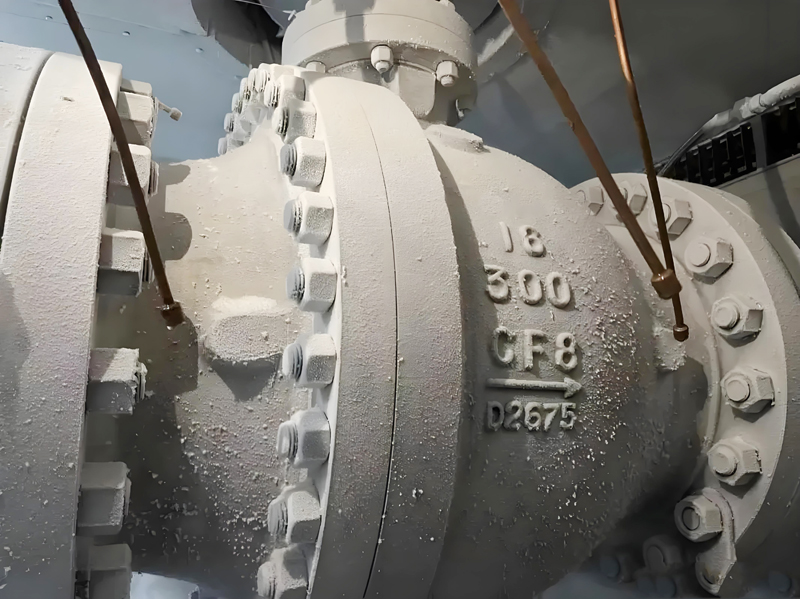
Ball valve variations
- Floating ball: Most common, affordable, works well for low-to-medium pressure.
- Trunnion mounted: Extra support for high pressure (think oil pipelines).
- V-port: A special ball with a V-shaped notch — allows limited flow control, not just on/off.
Check valve variations
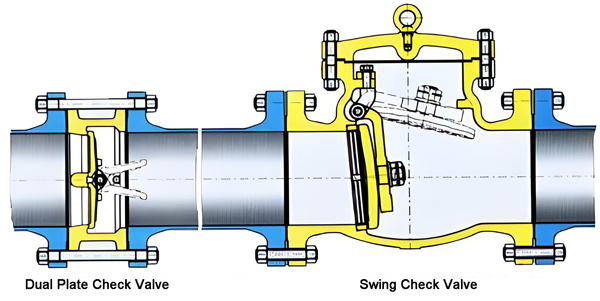
- Swing check: A hinged flap swings open. Works best in horizontal pipes.
- Lift check: A disc lifts up and down. Good for high-pressure steam or water.
- Dual plate / wafer check: Very compact, fits between flanges. Popular in tight spaces.
I once saw a dual plate check valve installed vertically in a chemical plant — and it worked fine because the spring-assisted design handled gravity. But a standard swing check would have failed there. Details matter.
How to Pick the Right Valve (and Supplier)
Before you buy, ask yourself three questions:
-
Do I need manual control or automatic protection?
- If you want to stop flow on demand → ball valve
- If you want to prevent reverse flow automatically → check valve
- Sometimes you need both in series — yes, that’s common.
-
What’s my pressure, temperature, and fluid?
- Corrosive chemicals? Go with stainless steel or PTFE-lined ball valves.
- Dirty wastewater? A swing check with a rubber flap might outlast a metal one.
-
Who is my supplier?
- Ask for test reports (pressure test, seat leakage test).
- Check if they stock common sizes or need custom orders — lead time kills projects.
- Look for ISO 9001, but don’t worship certificates. I’ve seen certified suppliers deliver bad castings. Ask for references from similar industries.
A Quick Story on Supplier Selection
A client of mine needed 20 pieces of 6-inch check valves for a irrigation pumping station. The cheapest quote came from an unknown online supplier. They saved 30% upfront — but three months later, two valves failed to seal. Water hammer cracked a concrete anchor. The repair cost ate up the savings ten times over.
Now I always say: Price is what you pay; value is what you get. A reliable supplier will give you material certificates, testing videos, and a clear warranty. Don’t skip that.
Final Verdict – Which One “Reigns Supreme”?
Neither. That’s the honest answer.
- Ball valves are kings of manual shut-off.
- Check valves are heroes of backflow prevention.
You can’t replace one with the other. The right choice depends entirely on your system’s needs. If you need both functions, install both — just leave enough space for maintenance.
Post time: Mar-08-2025