


As devices for controlling fluids, valves are widely used in industrial processes. Within numerous pipeline systems that transport fluids such as liquids, gases, powders, etc., valves play important roles. However, in some industrial scenarios with high requirements for cleanliness and safety, inappropriate valves may bring risks.
1. Challenges Faced By Valves In High Demand Environments
In the chemical industry, transporting corrosive media is the norm. The production line of food and beverage and water supply system have extremely high requirements for the safety and hygiene of pipelines. The pharmaceutical industry must strictly control the proportion of various drug media. In these environments, ordinary valves may harbor microorganisms, cross contamination, particle detachment, and chemical corrosion leads to fluid leakage. In high demand environments, how to avoid these problems is a challenge that valves face.
To meet the challenges, we need a valve that combines excellent sealing performance, corrosion resistance, and durability for high cleanliness and safe fluid delivery systems. And the stainless steel ball valve perfectly meets the requirements.
2. What Is A Stainless Steel BVall Valve?
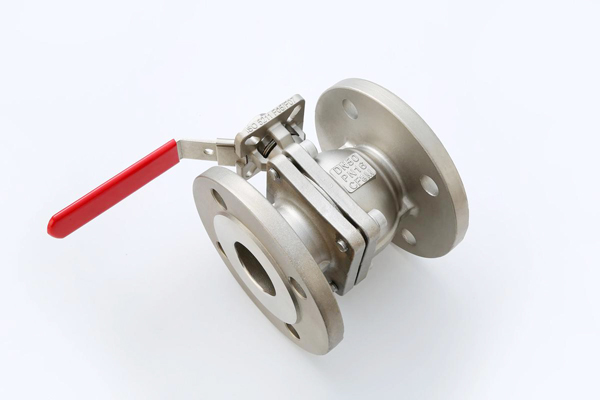
A Ball Valve is a type of valve that uses a ball as a closing element. This type of valve can be driven by a handle or other driving device. Rotate the ball 90 degrees so that the through-hole of the ball overlaps with or is perpendicular to the centerline of the valve body channel, then the valve can be fully open or fully closed. And a stainless steel ball valve is a valve with both the body and the ball made of stainless steel.
It usually consists of a stainless steel ball with a through-hole, a stainless steel valve body, a valve stem, and a seal. The flow of various fluids in the pipeline, such as air, steam, water, corrosive media, mud, oil, natural gas, etc., can be cut off, distributed, or changed by rotating the valve core. There are various classifications of stainless steel ball valves.
2.1 Classifications of stainless steel ball valves
2.1.1 Classification by structure:
Floating stainless steel ball valve
The stainless steel ball is floating. The pressure applied by the medium causes a slight displacement of the ball, which then presses tightly against the valve base at the outlet end, achieving a sealing effect.
Fixed stainless steel ball valve
Just as its name implies, the ball of this type of valve is fixed. The pressure exerted by the medium pushes the valve base towards the ball, forming a seal.
Elastic stainless steel ball valve
Utilizing the elastic deformation of the ball body to achieve sealing effect.
2.1.2 Classification by channel form:
According to different channel forms, stainless steel ball valves are classified into straight stainless steel ball valves, three-way stainless steel ball valves, right angle stainless steel ball valves, and so on.
Straight type is the most common structure used to cut off or connect medium flow. The three-way stainless steel ball valve can achieve the interconnection of three channels. And the right angle type is usually used to convert the flow direction of the fluid.
2.1.3 Classification by driving mode:
The opening and closing of valves require external force to drive. The initial stainless steel ball valves were all manual, operated by manual mechanisms such as handles. Until now, manual stainless steel ball valves are still a common low-cost type.
But with the development of electrical technology, pneumatic stainless steel ball valves and electric stainless steel ball valves have also been developed. The former can be quickly opened or closed by compressed air, while the latter is driven by electric actuators and is typically used in complex automation systems.
2.1.4 Classification by manufacturing method:
Forged stainless steel ball valve formed by pressure processing of solid metal, has superior mechanical strength and is more durable.
If it is to be used for complex shapes or large-sezed pipelines, the type of valve mentioned above is not very suitable. In this case, another type should be chosen, which is a cast stainless steel ball valve formed by molten metal casting.
2.2 Stainless steel materials in common use for stainless steel ball valves
Stainless steel is a widely used metal material. By adding different elements, stainless steel can have various characteristics. At present, there are many types and grades of stainless steel materials.
The most commonly used stainless steel material is 304 stainless steel, next is 316, which has better resistance to acid and alkali.
In addition to these two types, there are also different grades of stainless steel that are chosen by the new generation of ball valve manufacturers to provide more diverse performance options. For example, the stainless steel ball valves manufactured by NSW VALVE COMPANY use various stainless steel materials.
Cast stainless steel ball valve: Super Duplex Stainless Steel, Duplex Stainless Steel, CF8, CF3, A995 4A, 5A etc.
Forged stainless steel ball valve: A182 F304, F304L, F316, F316L etc.
3. Stainless Steel Ball Valve VS. Other Material Ball Valves
Due to its stainless steel material, Stainless Steel Ball Valves have many significant advantages.
3.1 Advantages compared to carbon steel ball valves
The most prominent advantage of stainless steel ball valves is their excellent corrosion resistance, which does not require additional treatment. They can withstand various corrosive media such as acid, alkali, salt, etc., while carbon steel materials do not have such good corrosion resistance.
Therefore, the service life of stainless steel ball valves will also be longer than that of carbon steel ball valves, which can ensure pipeline safety for a long time.
Another advantage of stainless steel ball valves is their smooth surface, which is less likely to adhere to bacteria and dirty things, ensuring the cleanliness and hygiene of the fluid medium.
3.2 Advantages compared to plastic ball valves
In our experience, fluid delivery systems using plastic ball valves are prone to leakage after prolonged operation. The reason behind this is that plastic materials are more prone to wear and tear.
Stainless steel ball valves are more wear-resistant and pressure resistant. Moreover, stainless steel is suitable for a wider temperature range. Therefore, for pipelines with high pressure environments and significant temperature changes, such as steam pipelines and food production pipelines, it is recommended to use stainless steel ball valves.
4. Stainless Steel Ball Valve VS. Other Stainless Steel Valves
Stainless steel ball valves and other stainless steel valves are quite different. It mainly lies in their structural differences. What are the advantages of stainless steel ball valves that other stainless steel valves do not have?
From the perspective of structure and principle, stainless steel ball valves are the only valves that use spheres as opening and closing components, which bring core advantages such as fast opening and closing, bidirectional sealing, and low fluid resistance. Compared with other structures of stainless steel valves, such as stainless steel gate valves, butterfly valves, etc., the stem of stainless steel ball valves only needs to be rotated to achieve switching, making it easy to achieve fast control and automated operation. The sealing is more reliable and the overall service life is longer.
In addition, its structure is simple and has fewer parts, making it superior to many other stainless steel valves in terms of daily maintenance, weight, and volume.
5. Stainless Steel Ball Valve Is A Must For High Cleanliness And Safety System
It is precisely because of the strong combination of material and structure that stainless steel ball valves have become an indispensable device in high cleanliness and safety systems. Stainless steel ball valves are often a better choice for working conditions that require corrosion resistance, high temperature and high pressure resistance, rapid cutting, bi-directional sealing, frequent operation, or limited space.
5.1 Chemical Industry
In the field of chemical engineering, stainless steel ball valves can effectively resist the erosion of chemicals, and are easy to maintain, reducing downtime in production, improving production efficiency, and ensuring production safety.
5.2 Food and Beverage Industry
The cleanliness and hygiene of food and beverage production lines are closely related to the safety and health of consumers. The stainless steel ball valve with a smooth surface is easy to clean and disinfect, and is not prone to bacterial growth, which perfectly meets the production requirements of food and beverage. Meanwhile, in the process of food and beverage processing, heating or cooling is often required, and stainless steel ball valves can maintain stable performance in both high and low temperature environments.
5.3 Pharmaceutical Industry
Imagine the serious consequences of a poorly sealed valve on a pharmaceutical production line? The proportion of medication will be inaccurate, leading to medicine failure. Therefore, stainless steel ball valves that can quickly open and close and have good sealing performance are crucial.
Not only in these fields, stainless steel ball valves can play a role but also in various industries such as oil and gas, sewage treatment, water supply systems, ventilation systems, etc., where they show excellent performance.
6. How To Choose Stainless Steel Ball Valves?
Firstly, you need to know what medium is being transported, its characteristics, pressure, and temperature range. Based on these factors, choose the appropriate type and specification of ball valve. Generally speaking, the size of stainless steel ball valves ranges from NPS 2 to NPS 48, and the pressure range is from Class 150 to Class 2500. These valves can meet most of the production needs.
Secondly, you need to choose a reliable ball valve supplier, which can help you achieve twice the result with half the effort. If you are unsure which stainless steel ball valve to choose, reliable suppliers can provide advice. So, you should prioritize suppliers with quality assurance, diverse product lines, and certification.You can also learn about the stainless steel ball valve products and services provided by NSW VALVE COMPANY. NSW VALVE COMPANY is a professional valve manufacturer with over 20 years of experience in valve production, processing, and export, and has obtained certifications such as CE, ISO, API, and TS.
Now, you should have a certain understanding of stainless steel ball valves, including what they are, what their characteristics are, how they compare to other valves, and what working conditions they are suitable for. I believe you can definitely choose the most suitable stainless steel ball valve.
Post time: Apr-11-2026