


A stainless steel valve is a valve made of stainless steel. It can be used to control the flow of various types of fluids, including air, water, steam, various corrosive media, slurry, oil, liquid metals, and radioactive media.
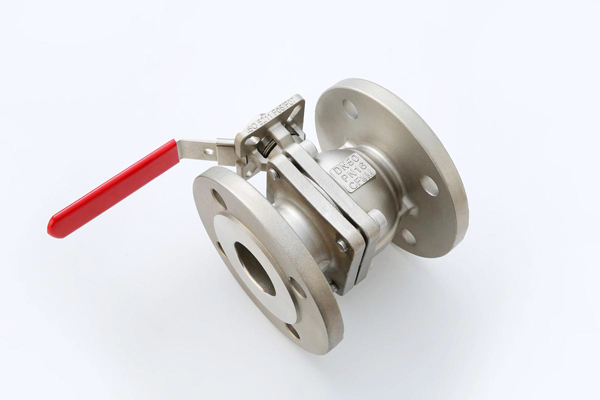
1. Basic Overview and Main Types of Stainless Steel Valves
Definition and Core Characteristics:
A stainless steel valve is a valve whose main components, such as the valve body and valve cover, are made of stainless steel.
It is a type of valve that is not prone to rust, is corrosion-resistant, and has good pressure resistance.
The working pressure range of stainless steel valves can range from ultra-low pressure of 0.0013MPa to ultra-high pressure of 1000MPa, and the applicable temperature range can range from ultra-low temperature of -269℃ to high temperature of 1430℃. It can control various types of fluids, including water, steam, oil, gas, slurry, various corrosive media, liquid metals, and radioactive fluids.
- High Temperature Resistance: Stainless steel has a high melting point and can withstand use in high-temperature environments.
- Corrosion Resistance: Stainless steel is not prone to rust and can withstand the use of corrosive media.
- Excellent pressure resistance: Stainless steel possesses excellent strength and toughness, enabling it to withstand high-pressure environments.
2. Classification of Stainless Steel Valves:
Stainless steel valves come in a wide variety of types, with common types including:
2.1. Classification by Valve Type:
- Stainless Steel Gate Valve
- Stainless Steel Globe Valve
- Stainless Steel Check Valve
- Stainless Steel Butterfly Valve
- Stainless Steel Ball Valve
Among them, stainless steel ball valves achieve rapid opening and closing by rotating the valve core 90 degrees. Based on their structure, they can be further subdivided into floating, fixed, and resilient types.
2.2. Classification by Valve Material:
- CF8 Valve (304 Valve)
- CF8M Valve (316 Valve)
- CF3 Valve (304L Valve)
- CF3M Valve (316L Valve)
Other stainless steel valve materials include 321 valves, 201 valves, etc.
3. What is Stainless Steel
Stainless steel is short for stainless and acid-resistant steel. Steels resistant to weak corrosive media such as air, steam, and water, or those possessing rust-resistant properties, are called stainless steel. Steels resistant to chemical corrosion media (acids, alkalis, salts, etc.) are called acid-resistant steel.
Metallurgists have developed many new steel grades by adding elements such as Mo, Cu, Nb, and Ti to stainless steel or reducing elements such as C, Si, Mn, S, and F, for different purposes and applications. Precipitation hardening (sedimentation hardening) stainless steel and duplex stainless steel have also been successfully developed.
Note: Commonly used stainless steel materials in valves include CF8, CF8M, CF3, and CF3M. There are also super duplex steels, such as 4A, 5A, and 6A.
Characteristics of Stainless Steel
- Good corrosion resistance: Stainless steel valves have excellent corrosion resistance, resisting the erosion of various chemical substances and suitable for various media and environments.
- Excellent Sealing Performance: Stainless steel valves utilize flexible materials as the sealing surface, achieving excellent sealing performance and effectively preventing fluid leakage.
- High Strength and Wear Resistance: Stainless steel valve materials possess high strength, enabling them to withstand use under varying pressures. Simultaneously, stainless steel valves exhibit excellent wear resistance, allowing for long-term use without significant damage.
- Aesthetically Pleasing and Easy to Clean: Stainless steel valves have an attractive appearance with a bright, glossy surface, making them easy to clean and maintain.
- Wide Applicability: Stainless steel valves can be selected based on specific application scenarios and fluid characteristics, offering wide applicability.
4. Stainless Steel Valve Selection Factors and Considerations
4.1. Working Medium and Environmental Analysis:
The primary considerations for selection are the corrosiveness, temperature, pressure, and flow rate of the medium. For example, in environments containing chloride ions (such as seawater or brine) or highly corrosive chemical media, the more corrosion-resistant 316 or 316L stainless steel should be prioritized over the conventional 304 stainless steel.
4.2. Stainless Steel Material Selection:
Different grades of stainless steel exhibit significant performance differences, requiring precise matching based on operating conditions.
- 304 Stainless Steel: Contains 18% chromium and 8% nickel (18/8 stainless steel), possessing good corrosion resistance and mechanical properties, suitable for most non-extreme environments, such as municipal water supply, food industry, and HVAC systems. Its tensile strength ≥520MPa and elongation ≥40%.
- 316/316L Stainless Steel: Based on 304, molybdenum (Mo) is added, significantly improving corrosion resistance, especially pitting corrosion resistance. Suitable for marine engineering, seawater desalination, chemical storage tanks, and other environments containing chloride ions or with strong corrosiveness. 316L has a lower carbon content (≤0.03%), effectively preventing intergranular corrosion after welding, making it suitable for large valves requiring welding.
- 3. Other Materials: For components requiring high strength and wear resistance (such as valve stems and valve cores), martensitic stainless steel (such as 410) may be used; in extreme conditions of high pressure, high corrosion, and high flow rate (such as oil and gas extraction), duplex stainless steel (such as 2205), which has twice the strength of 304, may be considered.
4.3. Valve Parameters and Sealing Requirements:
The appropriate valve size (nominal diameter DN) must be selected based on the pipeline size and system flow requirements, and must be strictly matched to the system’s working pressure rating. Sealing performance directly affects the performance; therefore, the appropriate sealing structure and material (such as PTFE soft seals or hard alloy hard seals) should be selected according to the characteristics of the medium.
5. Characteristics and Applications of Stainless Steel Valves
5.1. Structural and Classification Characteristics:
Besides being classified by structure into floating, fixed, and resilient types, stainless steel ball valves can also be classified by valve body construction into one-piece (reduced bore, compact structure), two-piece (full bore), and three-piece (combined structure, easy disassembly and maintenance, high pressure resistance). The nominal diameter range is wide, commonly from DN15 to DN200.
5.2. Performance Advantages:
- Corrosion Resistance: Stainless steel valves have excellent corrosion resistance, allowing them to withstand the use of corrosive media and ensuring the safety of pipeline systems.
- High Temperature Resistance: Stainless steel valves have high temperature resistance, allowing them to withstand use in high-temperature environments and ensuring the stability of pipeline systems.
- Good Pressure Resistance: Stainless steel valves have excellent pressure resistance, allowing them to withstand use in high-pressure environments and ensuring the safety of pipeline systems.
- Rust Resistance: Stainless steel valves are not prone to rust, extending their service life and reducing maintenance costs.
In summary, due to their excellent performance, stainless steel valves hold an important position in the valve industry. Stainless steel valves are widely used to improve the safety and stability of pipeline systems and reduce maintenance costs.
6. Application Areas
Stainless steel valves are widely used in chemical, petrochemical, petroleum, papermaking, mining, power, liquefied gas, food, pharmaceutical, water supply and drainage, municipal, machinery equipment, electronics, and urban construction industries. They are important control components in pipeline fluid transport systems, used to change the cross-sectional area of the passage and the direction of media flow, and have functions such as guiding, shutting off, regulating, throttling, check valves, diverting, or overflow pressure relief.
7. Precautions
When selecting stainless steel valves, the appropriate material and model should be chosen based on the specific operating environment and media characteristics.
Stainless steel valves should be operated strictly in accordance with relevant specifications during installation and maintenance to ensure their normal operation and service life.
Regularly inspect and maintain stainless steel valves to promptly identify and address potential problems and malfunctions.
Installation and Maintenance Points: During installation, the valve stem should be vertically upward, and the lifting rope should be attached to the flange, not the handwheel or valve stem. To prevent rusting, avoid scratching the surface during installation and use. After welding, timely pickling and passivation treatment should be performed to restore the protective film. In corrosive environments, regular cleaning and keeping the valve dry are recommended.
8. Summary
stainless steel valves are highly favored due to their excellent performance and wide range of applications. When selecting and using stainless steel valves, factors such as material, model, operating environment, and installation and maintenance requirements should be fully considered.
Post time: Feb-24-2026