


1. Introduction: The Critical Role of High Pressure Valves in Plant Safety
In supercritical power plants, offshore hydrocarbon injection skids, and high-pressure gas transmission systems, the integrity of your piping system hinges on one component: the high pressure valve. When operating at differential pressures exceeding 3,000 PSI and temperatures above 500°C, selecting the wrong valve doesn’t just reduce efficiency—it creates a significant safety and operational risk.
Standard bolted-bonnet designs often fail under these extreme conditions. Thermal cycling causes flange bolts to relax, gaskets to lose compression, and costly unplanned shutdowns to occur. This is why experienced engineers and EPC procurement teams transition to ASME Class 2500 rated valves featuring advanced pressure-seal bonnet technology.
This guide provides a practical engineering and sourcing framework for three critical categories of high pressure valves—ball valves, globe valves, and gate valves—in severe service environments.
2. ASME Class 2500: The Engineering Foundation for High Pressure Valves
Under ASME B16.34, Class 2500 represents one of the highest standard pressure classes for industrial valves. However, the actual working pressure of a high pressure valve varies significantly based on its body material and service temperature.
| Body Material (ASTM) | Pressure at -29°C to 38°C | Pressure at 500°C | Typical Severe Service |
|---|---|---|---|
| Carbon Steel (A105 / WCB) | 425.5 bar (6,170 PSI) | 140.7 bar (2,040 PSI) | Non-corrosive, moderate temperature. |
| Alloy Steel (F22 / WC9) | 425.5 bar (6,170 PSI) | 239.9 bar (3,480 PSI) | High-temp steam, boiler feedwater. |
| Stainless Steel (F316 / CF8M) | 362.0 bar (5,250 PSI) | 193.1 bar (2,800 PSI) | Corrosive hydrocarbons, chemical injection. |
This data reveals a critical insight: a Class 2500 carbon steel valve loses over 65% of its pressure capacity at 500°C. That is why pressure-sealed bonnet high pressure valves made from alloy or stainless steel are mandatory for critical high-temperature isolation—not just for their seal, but for their material performance under stress.
3. Pressure-Sealed Bonnet: The Self-Tightening Technology Behind Reliable High Pressure Valves
The defining feature of any severe-service high pressure valve is the pressure-sealed bonnet. Unlike conventional bolted designs that fight against internal pressure, the pressure-seal design leverages that same pressure to reinforce the seal.
How it works:
- Internal line pressure pushes upward against the floating bonnet.
- This upward force drives a soft metal or graphite gasket against the tapered internal wall of the valve body.
- The higher the line pressure, the greater the compressive force on the gasket—creating a seal that tightens as pressure increases.
This mechanism eliminates joint relaxation during thermal transients, making pressure-seal designs the industry standard for high-temperature, high-pressure steam and hydrocarbon isolation.
4. Core Product Categories: High Pressure Ball Valve vs. High Pressure Globe Valve vs. Gate Valve
Selecting the correct high pressure valve depends on your primary operational requirement: rapid quarter-turn isolation, precise flow throttling, or unidirectional flow prevention.
High Pressure Ball Valve (Quarter-Turn Isolation)
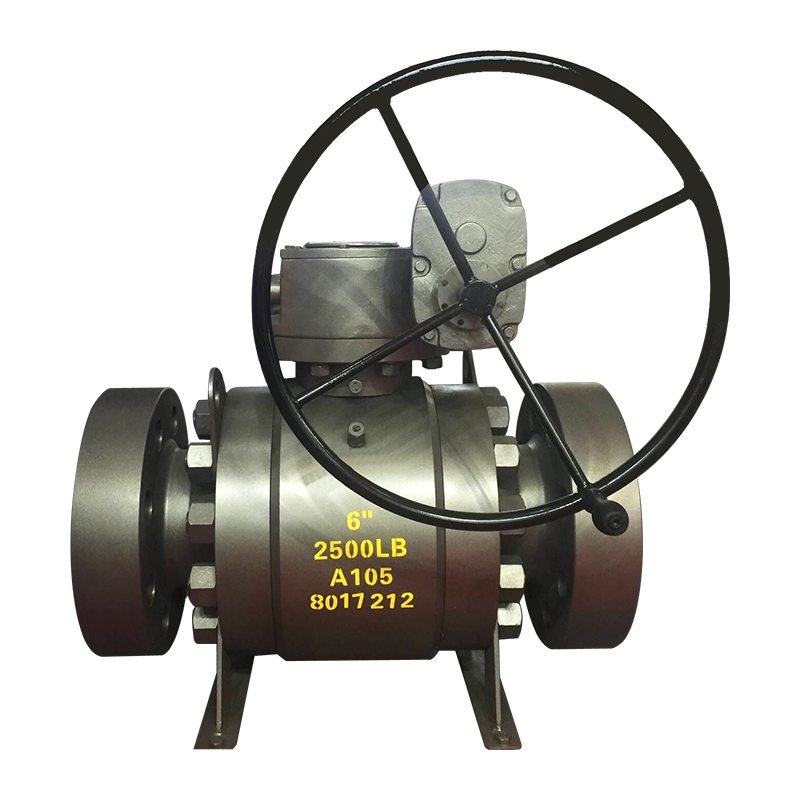
For main gas transmission lines, offshore manifolds, and emergency shutdown systems, the high pressure ball valve offers fast, full-bore quarter-turn operation.
- Class 2500 Design: Strictly engineered with a trunnion-mounted ball, anchored on bearings that transfer hydraulic thrust to the body—reducing seat wear and lowering operating torque.
- Critical Spec for Severe Service: Requires hard-faced metallic seats (HVOF-applied Tungsten Carbide or Chromium Carbide) with spring-energized sub-seats. Soft seats (Devlon, PEEK) are limited to applications below 180°C.
- Key Insight: A high pressure ball valve is the preferred choice when low actuation effort and fast, reliable shut-off are mission-critical.
High Pressure Globe Valve (Precise Throttling & Regulation)
When precise flow regulation or frequent throttling under high differential pressure is required, the high pressure globe valve is the industry benchmark.
- Class 2500 Design: Employs a guided plug and heavy-duty stem to resist high fluid velocities and cavitation. The S-shaped flow path generates a higher pressure drop than gate valves, enabling fine control.
- Critical Spec for Severe Service: Often incorporates a pressure-balanced plug design to minimize stem thrust, preventing the need for oversized gear operators or hydraulic actuators.
- Key Insight: A high pressure globe valve is essential for feedwater control, bypass lines, and any service demanding precise modulation against high delta-P.
High Pressure Gate Valve (Mainline Isolation)
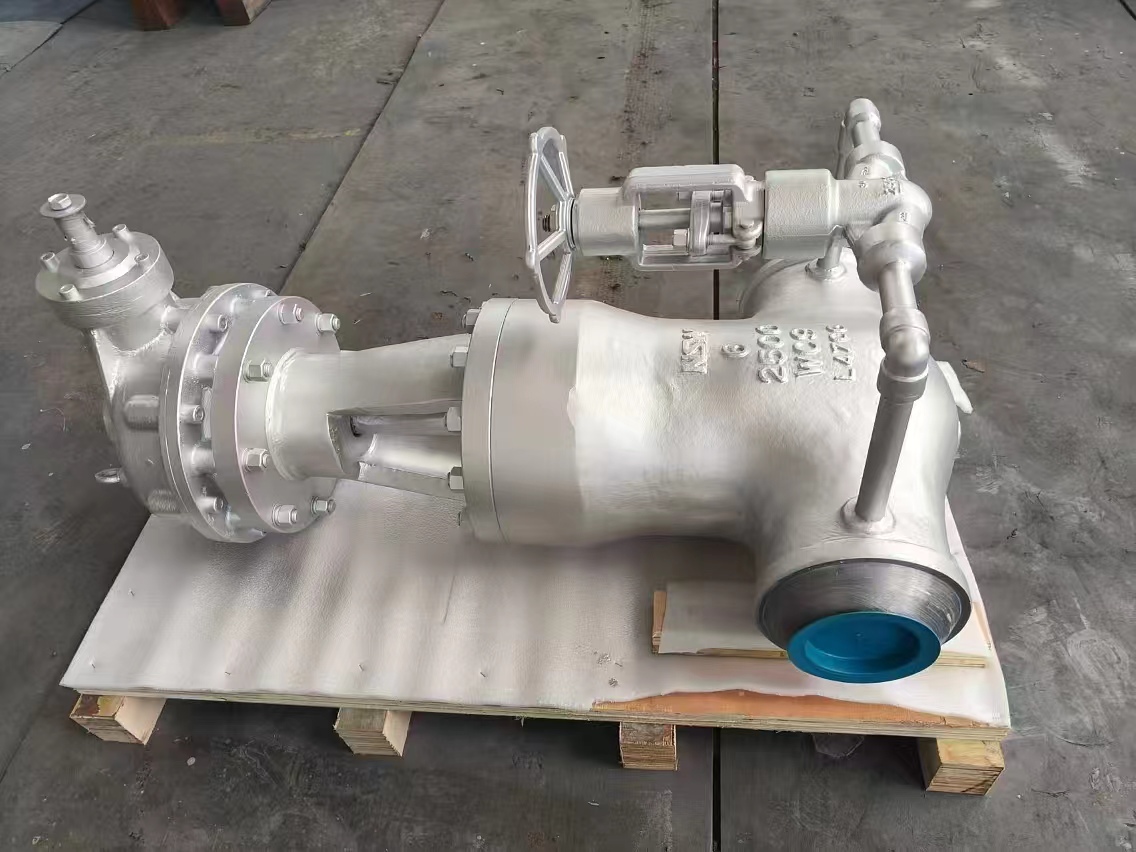
For high-energy piping systems such as boiler feedwater and main steam isolation, the high pressure gate valve serves as the primary shut-off barrier.
- Class 2500 Design: Features a flexible wedge or parallel slide disc to withstand extreme hydraulic forces without locking. Parallel slide designs are preferred above 450°C as they accommodate thermal expansion without jamming.
- Critical Spec for Severe Service: Must include Stellite-overlaid body seat rings and wedge guide rails to prevent galling during high-differential opening and closing cycles.
- Key Insight: A high pressure gate valve is the go-to solution for minimizing pressure drop in critical on/off isolation services.
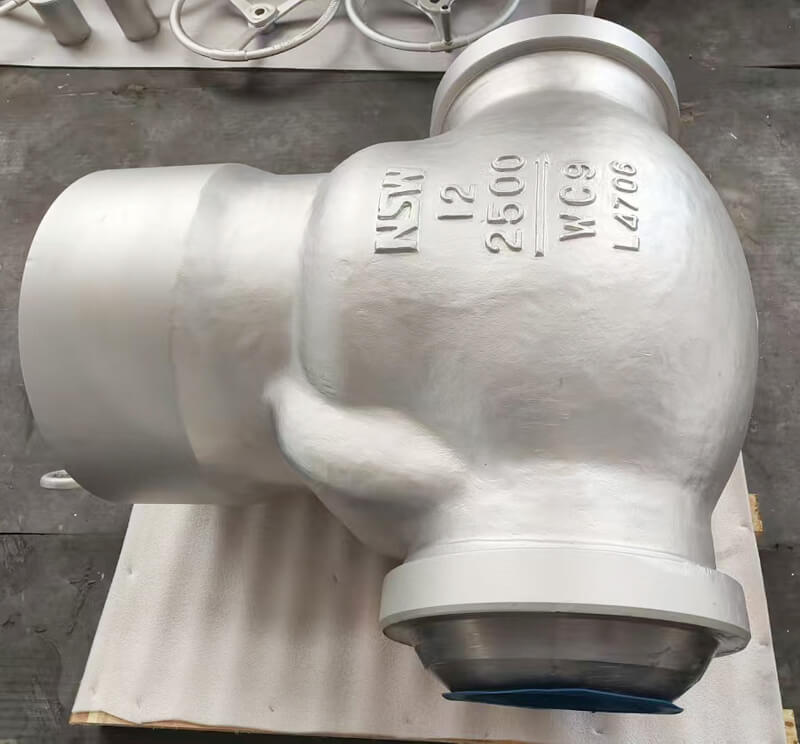
High Pressure Check Valve (Backflow Prevention)
- Best For: Protecting pumps and compressors from water hammer and destructive reverse flow.
- Class 2500 Design: Piston-lift or tilting-disc configurations with built-in dashpots to dampen disc movement and prevent “chatter.”
- Key Insight: This is a critical safety component in any high pressure system to prevent catastrophic over-speed damage to rotating equipment.
| Feature / Property | High Pressure Ball Valve | High Pressure Globe Valve | High Pressure Gate Valve | High Pressure Check Valve |
|---|---|---|---|---|
| Primary Function | On/Off Isolation | Flow Throttling / Regulation | On/Off Mainline Isolation | Backflow Prevention |
| Flow Efficiency (Cv) | Highest (Full Bore) | Low (S-Shaped Path) | Very High (Unobstructed) | Medium-High |
| Sealing Mechanism | Trunnion-mounted, Spring-loaded Metal Seats | Pressure-sealed Guided Plug | Pressure-sealed Flexible Wedge/Parallel Slide | Pressure-sealed Piston/Tilting Disc |
| Max Temperature (Alloy) | Up to 550°C | Up to 650°C | Up to 650°C | Up to 650°C |
| Actuation Effort | Low (Quarter-Turn) | Highest (Multi-Turn vs. ΔP) | High (Multi-Turn) | Self-Actuating |
5. Procurement Checklist for Sourcing High Pressure Valves (Class 2500)
Sourcing a high pressure valve for Class 2500 service requires more than a purchase order. A rigorous procurement process—validated by engineering, quality, and supply chain teams—is essential to avoid hidden costs from unplanned downtime.
- Cast Bodies: Mandate 100% Radiographic Testing (RT) per ASME B16.34 Special Class.
- Forged Bodies: Mandate 100% Ultrasonic Testing (UT) with full material traceability.
6. Conclusion: Engineering Reliability from Specification to Commissioning
From fast, full-bore isolation with a high pressure ball valve to precise throttling with a high pressure globe valve, and robust on/off control with a gate valve, your selection decision directly impacts plant safety, efficiency, and profitability. Moving from standard bolted-bonnet designs to robust pressure-seal technology is the first step. True reliability, however, is achieved through a comprehensive process—understanding the engineering principles, selecting the correct valve type, and holding your suppliers to the highest quality and testing standards.
At NSW VALVE COMPANY (nswvalve.com), we engineer and manufacture API 6D and ASME B16.34 compliant high pressure valves for the world’s most demanding environments. From high pressure ball valves for gas skids to pressure-sealed globe valves for power generation, our engineering-led approach delivers fully traceable, NDE-inspected solutions built for long-term performance.
Ready to optimize your high pressure valve procurement strategy? Contact our technical sales team at nswvalve.com to discuss your project data sheet, request 3D CAD models, or consult on our certified alloys and manufacturing lead times.
Post time: Jul-30-2026