


In oil and gas facilities, chemical plants, LNG terminals, and offshore platforms, isolation is not just a routine operation. It is a safety requirement. Before maintenance starts on a pump, compressor, instrument, or downstream piping section, operators need to know that pressure has been fully isolated and cannot leak back into the work area.
That is where the DBB valve becomes important.
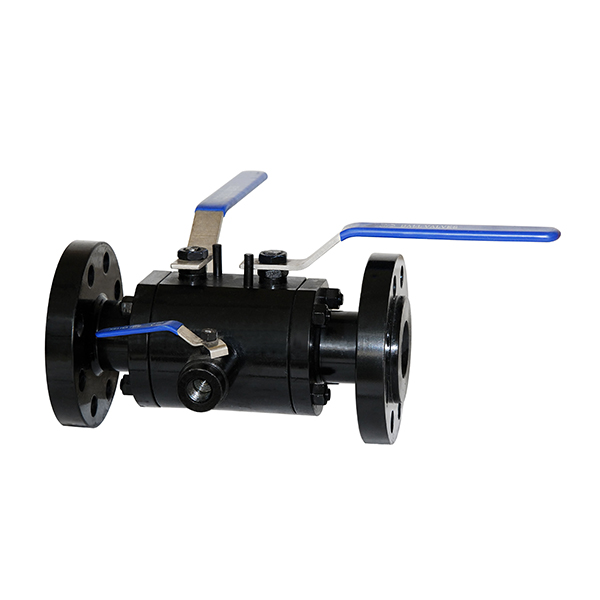
DBB stands for Double Block and Bleed. The concept is straightforward: two independent sealing barriers with a bleed point between them. In practice, this arrangement gives operators a reliable way to verify isolation before maintenance or inspection work begins.
Among different DBB configurations, the double ball ball valve has become one of the most widely used solutions because it combines compact design, reliable sealing, and easier installation into a single integrated assembly.
In many modern pipeline systems, especially offshore and high-pressure applications, integrated DBB valves are now preferred over installing two separate ball valves with additional piping between them.
What Is a DBB Valve?
A DBB valve provides:
- two independent isolation points
- one bleed or vent connection between them
The purpose is simple. After both isolation barriers are closed, the cavity between them can be vented through the bleed port. If no pressure or media escapes, operators know both seals are holding properly.
This verification step matters in real operating conditions. Even a small leak through a worn seat can create serious safety risks during maintenance.
In older installations, DBB functionality was often achieved using:
- two separate ball valves
- a spool section
- an additional bleed valve
That arrangement still exists in many plants. However, it increases:
- piping complexity
- flange connections
- installation weight
- potential external leak points
A double ball ball valve integrates two ball mechanisms inside one valve body with a central bleed port. The overall system becomes more compact and easier to maintain.
For offshore projects and modular skid systems, that reduction in piping and flange count can make a noticeable difference.
How a Double Ball Ball Valve Works
The operating principle is not complicated.
Inside the valve body are two separate ball closures positioned in series. Between them is a cavity connected to a bleed valve.
When the first ball closes, flow is blocked at the upstream side. The second ball provides another independent sealing barrier downstream. Opening the bleed valve between them releases trapped pressure and confirms whether both seals are functioning correctly.
In real plant conditions, operators often use the bleed port to:
- verify isolation before maintenance
- drain trapped media
- check seat leakage
- safely depressurize the cavity
This is one reason DBB valves are widely used in hazardous service lines carrying:
- hydrocarbons
- high-pressure gas
- toxic chemicals
- hydrogen
- LNG
A standard single ball valve can isolate flow, but it does not provide the same level of verification.
Floating vs Trunnion Double Ball Valve Designs
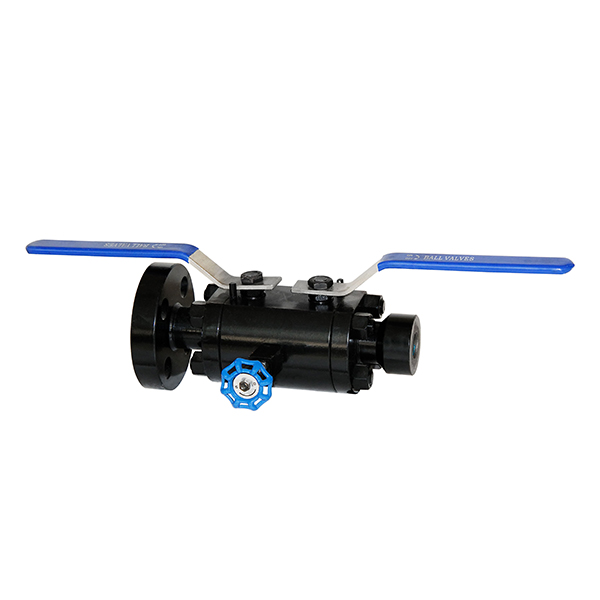
Not all double ball DBB valves use the same internal construction. The two most common designs are floating ball and trunnion-mounted ball configurations.
Floating Ball Design
Floating ball construction is common in smaller sizes and moderate-pressure applications.
In this design, line pressure pushes the ball against the downstream seat to create sealing force. The structure is relatively simple, which helps reduce manufacturing cost.
Floating double ball valves are widely used in:
- general process piping
- water systems
- medium-pressure hydrocarbon service
- utility applications
For many industrial systems, floating designs perform well and are easier to maintain.
However, operating torque increases as valve size and pressure rise. In larger pipeline systems, this becomes a practical limitation.
Trunnion-Mounted Design
Trunnion-mounted double ball valves are typically used in:
- large-diameter pipelines
- high-pressure gas systems
- offshore installations
- severe service conditions
In this design, the ball is mechanically supported by upper and lower trunnion bearings. Instead of the ball moving toward the seat, the seat assembly moves toward the ball.
This provides several operational advantages:
- lower operating torque
- more stable sealing under pressure fluctuations
- improved performance in large sizes
- better control during high-cycle operation
For Class 600, 900, 1500, or higher-pressure systems, trunnion-mounted DBB valves are generally preferred.
Many pipeline engineers also choose trunnion designs for automated systems because actuator sizing becomes more manageable.
Why Use a Double Ball Ball Valve Instead of Two Separate Valves?
Technically, two separate ball valves with a bleed connection can provide DBB functionality. But integrated DBB valves offer several practical advantages that become important in real projects.
Fewer Leak Paths
Every flange connection creates another potential external leak point.
A traditional arrangement with two separate valves usually requires:
- additional flanges
- extra gaskets
- spool sections
- more bolting
An integrated double ball ball valve reduces the number of external connections. On large facilities with hundreds of valves, this significantly reduces potential fugitive emissions and maintenance work.
Reduced Weight and Space Requirements
On offshore platforms and FPSOs, space is limited and structural weight directly affects project cost.
Many offshore EPC contractors use integrated DBB valves mainly because they simplify piping layouts and reduce overall installation weight.
Compared with separate valve assemblies, compact DBB valves usually require:
- less support steel
- shorter installation length
- less insulation work
- fewer pipe welds
For subsea systems and modular process skids, compact design is often a major advantage.
Easier Isolation Verification
One of the biggest operational advantages is the ability to quickly verify sealing integrity.
After closing both balls, operators simply open the bleed valve. If no pressure is released, both sealing barriers are functioning correctly.
This process is faster and easier than pressure testing two separate valves individually.
In shutdown situations where maintenance crews need rapid confirmation of isolation, this becomes extremely useful.
Three-Piece vs Top-Entry vs One-Piece Body Designs
Body construction affects both maintenance access and long-term operating cost.
Three-Piece Body
Three-piece DBB valves use bolted end caps connected to the center body.
This design allows technicians to remove internal components without cutting the valve out of the pipeline. In refineries and chemical plants, this can reduce maintenance downtime considerably.
Three-piece construction is common where periodic seat replacement is expected.
Top-Entry Design
Top-entry DBB valves allow all internal parts to be accessed from the top of the valve body.
This design is widely used in:
- subsea systems
- transmission pipelines
- offshore platforms
- welded piping systems
The valve body remains connected to the pipeline during maintenance, which helps reduce outage time.
For large-diameter critical service lines, top-entry construction is often the preferred option.
One-Piece Body
One-piece DBB valves are compact and lightweight but usually cannot be repaired in-line.
They are commonly used in:
- utility service
- small process lines
- lower-cost applications
For critical isolation service, many operators still prefer maintainable body designs.
Soft-Seated vs Metal-Seated DBB Valves
Seat material selection affects:
- leakage performance
- temperature capability
- wear resistance
- service life
Soft-Seated Valves
Soft-seated double ball valves typically use:
- PTFE
- reinforced PTFE
- PEEK
These materials provide very tight shutoff and low operating torque.
Soft-seated DBB valves are widely used for:
- gas service
- oil systems
- chemical processing
- hydrogen applications
However, soft materials have temperature limitations and may wear faster in abrasive service.
Metal-Seated Valves
Metal-seated DBB valves are designed for:
- high-temperature systems
- abrasive media
- severe pressure conditions
- fire-safe applications
Seat and ball surfaces are usually hard-coated using materials such as:
- Stellite
- Inconel
- tungsten carbide
Compared with soft seats, metal seats provide better durability under harsh operating conditions.
Many metal-seated DBB valves are also certified to:
- API 607
- API 6FA
for fire-safe performance.
Where DBB Valves Are Commonly Used
The double ball ball valve is now widely used across several industries where isolation reliability is critical.
Oil and Gas Pipelines
Used in:
- wellheads
- compressor stations
- pig launcher systems
- tank farms
- process skids
Pipeline operators use DBB valves to improve maintenance safety and reduce leakage risk.
Offshore Platforms and FPSOs
Compact DBB assemblies help reduce:
- piping congestion
- structural weight
- maintenance complexity
Fire-safe trunnion-mounted DBB valves are common on offshore production systems.
LNG and Cryogenic Service
Cryogenic DBB valves are designed for temperatures down to -196°C.
Special materials and extended bonnet construction help prevent low-temperature sealing problems.
Hydrogen Systems
Hydrogen molecules are extremely small and difficult to contain.
DBB valves with high-integrity sealing systems are increasingly used in:
- hydrogen refueling stations
- hydrogen transport systems
- clean energy projects
Chemical and Petrochemical Plants
Chemical facilities often require double isolation for:
- toxic media
- corrosive fluids
- hazardous process lines
The bleed connection also allows safe cavity draining and pressure verification before maintenance.
Important Specifications to Review Before Ordering
When selecting a DBB valve, engineers usually evaluate the following parameters carefully.
| Specification | Typical Range |
|---|---|
| Valve Size | 1/2″ to 24″ |
| Pressure Rating | ASME Class 150–2500 |
| Temperature Range | Cryogenic to high temperature |
| Body Materials | Carbon steel, stainless steel, duplex, Inconel |
| End Connections | Flanged, BW, SW, threaded |
| Fire Safety | API 607 / API 6FA |
| Testing Standards | API 598, API 6D, ISO 5208 |
| Sour Service | NACE MR0175 / MR0103 |
Engineers should also verify the bleed valve specification. In some low-quality assemblies, the bleed valve becomes the weakest component in the system.
Common Mistakes When Selecting a DBB Valve
Several specification mistakes appear repeatedly in industrial projects.
Assuming All DBB Valves Are the Same
Some products marketed as DBB valves use only one ball with dual seats rather than two independent balls.
For critical isolation service, always review the valve cross-section drawing carefully.
Ignoring Thermal Cavity Pressure
When liquid becomes trapped between two closed balls, thermal expansion can generate extremely high cavity pressure.
Proper cavity relief protection is essential.
Choosing the Wrong Body Design
In welded pipeline systems, replacing a one-piece valve can become expensive and time-consuming.
Maintenance accessibility should be considered early in the project.
Overlooking Bleed Valve Quality
The bleed assembly should match the pressure rating and corrosion resistance of the main valve body.
This detail is sometimes overlooked during procurement.
Final Thoughts
For low-pressure utility systems, a standard single ball valve may be sufficient.
But in applications involving:
- hazardous media
- high pressure
- offshore systems
- gas transmission
- critical maintenance isolation
a properly designed DBB valve provides a much safer and more reliable solution.
The double ball ball valve remains one of the most practical DBB configurations because it combines:
- compact installation
- reduced leak paths
- reliable isolation verification
- easier maintenance access
As safety requirements continue to increase across oil and gas, LNG, hydrogen, and chemical industries, integrated DBB valve systems are becoming standard practice rather than optional upgrades.
For engineers selecting valves for critical service, reviewing the actual internal design, seat construction, pressure rating, and maintenance accessibility is often more important than comparing price alone.
Post time: May-15-2026