


When you work with industrial gate valves, two standards come up again and again: API 600 and ASME B16.34. They are not interchangeable, and picking the wrong one can lead to higher costs or even system failure.
This guide walks you through the structural differences, typical working conditions, and real‑world pros and cons of each standard. By the end, you will know exactly when to specify an API 600 gate valve and when an ASME B16.34 gate valve is the smarter choice.
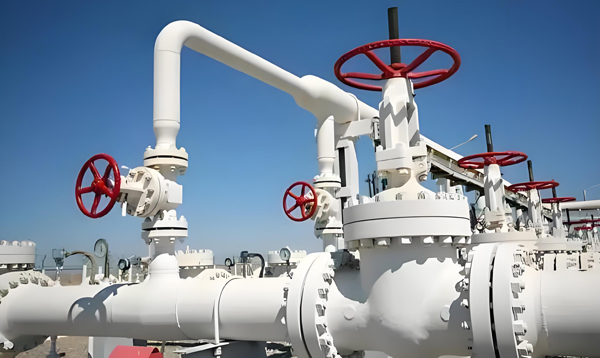
What Is an API 600 Gate Valve?
API 600 is a product standard published by the American Petroleum Institute. Its full title is *Steel Gate Valves – Flanged and Butt‑welding Ends, Bolted Bonnets*. First issued in 1949, it was created specifically for severe service in oil refining and natural gas plants.
The standard covers pressure classes from Class 150 to Class 2500 and sizes from NPS 2 to NPS 48. It defines more than 20 technical requirements, including materials, wall thickness, stem diameter, sealing performance, low‑temperature toughness, and fire safety. The latest edition (API STD 600:2021) reinforces the need for full‑bore design, heavy wall thickness, and large‑diameter stems.
What Is an ASME B16.34 Gate Valve?
ASME B16.34 is a basic valve standard developed by the American Society of Mechanical Engineers. It applies to flanged, threaded, and welding end valves of all common types – gate, globe, check, ball, and butterfly valves.
Unlike API 600, which only covers gate valves, ASME B16.34 provides pressure‑temperature ratings, material groups (49 in total), wall thickness formulas, marking rules, and testing requirements. It ranges from Class 150 up to Class 4500, and works for temperatures from -29°C to over 500°C, depending on the material.
Structural Differences Between API 600 and ASME B16.34 Gate Valves
The two standards look similar at first glance, but their internal designs differ significantly.
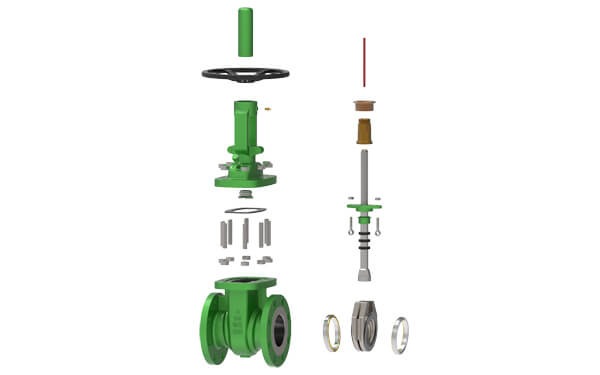
Wall Thickness
ASME B16.34 specifies the minimum wall thickness needed for safe pressure containment. This keeps valves light and cost‑effective.
API 600 demands extra wall thickness – typically about 20% more – which acts as a built‑in corrosion allowance. That extra metal extends service life in erosive refinery environments.
Stem Design
API 600 requires a stiff, rigid stem with a larger diameter than general standards. This prevents bending under high pressure or when the wedge sticks due to thermal expansion or debris.
ASME B16.34 does not force a rigid stem; manufacturers can choose more flexible designs if the application allows.
Bonnet Connection
API 600 gate valves almost always use a bolted bonnet or a pressure‑seal bonnet. The pressure‑seal type becomes tighter as internal pressure rises – ideal for high temperature and high pressure.
ASME B16.34 leaves the bonnet type open, giving designers more freedom.
Sealing Type
API 600 demands a metal‑to‑metal seal with hardfacing (e.g., Stellite) on the seat and wedge. This handles high temperatures and particle‑laden media.
ASME B16.34 allows either soft seals or metal seals, depending on the manufacturer’s design.
Wedge Type and Bore Size
API 600 gate valves are almost always full‑bore (full port) to reduce flow resistance and prevent debris buildup. The wedge is typically a solid or flexible wedge.
ASME B16.34 permits reduced bore designs as long as the minimum flow area meets safety requirements.
Overall Weight
Because of the heavier wall, larger stem, and stiffer bonnet, an API 600 gate valve weighs roughly 20% more than an ASME B16.34 gate valve of the same size and pressure class. That weight difference is a direct result of the different design philosophies.
Working Conditions – Where Each Standard Excels
Typical Service for API 600 Gate Valves
You will find API 600 gate valves in the toughest industrial services:
- Oil refineries – catalytic cracking, hydrocracking, and coker units where the media contains sulfur, high‑temperature hydrocarbons, or catalyst fines.
- High‑pressure steam systems – above 5 MPa (about 725 psi), such as main steam lines in power stations.
- High‑temperature solids‑laden flow – fluids carrying coke particles or catalyst dust.
- Fire‑prone areas – the metal seat gives inherent fire safety without extra certification.
Typical Service for ASME B16.34 Gate Valves
ASME B16.34 gate valves cover a much broader range of general industry:
- Water treatment and HVAC – low‑pressure, clean media up to Class 600 and 425°C.
- Chemical process lines – many material options available, but without the extra safety margins of API 600.
- Power plant auxiliary systems – cooling water, lube oil, and low‑pressure steam.
- Ordinary oil and gas transmission – where no severe erosion or fire risk exists.
Advantages and Disadvantages
API 600 Gate Valve – Pros
| Advantage | Why It Matters |
|---|---|
| Extreme reliability in severe service | Designed for Class 150 to Class 2500 with 20+ hard requirements |
| Excellent sealing | Metal seat handles particles and high temperatures; low‑emission packing available |
| Inherent fire safety | No extra testing needed for flammable service |
| High structural strength | Thick walls, large stem, and strong bonnet resist abuse |
| Long service life | Extra wall thickness and hardfacing stand up to corrosion and erosion |
API 600 Gate Valve – Cons
| Disadvantage | Why It Matters |
|---|---|
| Heavy and large | ~20% heavier than an equivalent ASME B16.34 valve, requiring stronger pipe supports and more space |
| Higher cost | More material, more complex manufacturing, and stricter testing |
| Slow operation | Gate valves take many turns to open or close fully |
| Seat wear risk | The wedge slides against seats during stroke, which can cause galling in some services |
| Not for throttling | Partial opening damages the seat and wedge quickly |
| High torque needed | Large pressure differentials require strong actuators |
ASME B16.34 Gate Valve – Pros
| Advantage | Why It Matters |
|---|---|
| Broad applicability | Covers gate, globe, check, ball, butterfly – any material group |
| Highly standardized | Pressure‑temperature tables make selection easy and ensure interchangeability |
| Design flexibility | No forced metal seal or rigid stem – manufacturer can optimize |
| Lower cost | Minimum wall thickness saves material and machining |
| Cross‑industry usage | Works in oil & gas, power, chemicals, water, and general industry |
ASME B16.34 Gate Valve – Cons
| Disadvantage | Why It Matters |
|---|---|
| Little margin for severe service | Minimum wall gives no extra corrosion or erosion allowance |
| No industry‑specific upgrades | Lacks refinery‑specific tests (e.g., fire safety, low‑emission) |
| Not fire‑safe by default | Must explicitly order fire‑safe design if needed |
Quick Comparison Table – API 600 vs ASME B16.34
| Feature | API 600 Gate Valve | ASME B16.34 Gate Valve |
|---|---|---|
| Standard type | Industry‑specific (oil & gas) | General base standard |
| Valve types covered | Only flanged/butt‑weld gate valves | All common valve types |
| Pressure range | Class 150 – 2500 | Class 150 – 4500 |
| Size range | NPS 2 – 48 | Depends on valve type |
| Wall thickness | Heavy (with corrosion allowance) | Minimum (pressure‑based) |
| Seal type | Mandatory metal‑to‑metal | Soft or metal (optional) |
| Stem design | Rigid, large diameter | Can be non‑rigid |
| Bore | Full bore only | Reduced bore allowed |
| Fire safety | Inherent (metal seat) | Not required |
| Typical applications | Refineries, high‑pressure steam, high‑temperature solids | Water, HVAC, general chemicals, low‑pressure steam |
How to Choose Between API 600 and ASME B16.34 Gate Valves
The key is to understand that API 600 builds on top of ASME B16.34. An API 600 gate valve must also meet the pressure‑temperature ratings of ASME B16.34. In other words, API 600 is the **reinforced version** for harsh duty.
Choose API 600 when:
- The media contains sulfur, hydrogen, catalyst fines, or coke particles.
- Steam pressure exceeds 5 MPa (≈725 psi).
- The valve is in a fire‑risk zone and you want inherent fire safety.
- The pipeline has frequent thermal cycles or vibration – the rigid stem and heavy wall resist fatigue.
Choose ASME B16.34 when:
- The media is clean water, air, inert gas, or light oil.
- Pressure class is Class 150 or Class 300 in non‑corrosive service.
- The system is HVAC, utility water, or firewater.
- You need a non‑gate valve (globe, check, ball) – then ASME B16.34 is your base standard.
Special case – power industry: High‑pressure power valves often require both API 600 and ASME B16.34, plus additional standards like ASME B16.34 Class 4500 or MSS SP‑144 for high‑pressure, high‑temperature service.
Final Thoughts
API 600 and ASME B16.34 are not competitors – they serve different purposes. ASME B16.34 provides the floor for safe valve design across all industries. API 600 adds a heavy‑duty ceiling for the oil, gas, and petrochemical sectors.
If you specify a standard gate valve for a refinery hydrotreater or a main steam line, go with API 600. The extra weight and cost pay off in reliability and safety.
If you need a general‑purpose gate valve for a cooling water line or low‑pressure steam, ASME B16.34 is perfectly adequate and far more economical.
Understanding this relationship helps you avoid over‑specifying (wasting money) or under‑specifying (risking failure).
—
References (for reader verification – original sources suggested)
- API Std 600:2021 – Steel Gate Valves
- ASME B16.34-2020 – Valves – Flanged, Threaded, and Welding End
- Industry best practices from major valve manufacturers and engineering guidelines
Post time: Apr-27-2026