


Introduction – Why Understanding Ball Valve Price Is More Important Than You Think
Ball valves are everywhere – from residential water systems to offshore oil rigs. Yet when procurement professionals, engineers, or facility managers start requesting quotes, one question dominates: *What determines ball valve price?*
The answer is not straightforward. A 2-inch stainless steel floating ball valve can cost $30 from one supplier and $300 from another. Without understanding the price structure, buyers risk overpaying for unnecessary features – or worse, buying dangerously cheap valves that fail under pressure.
This guide goes beyond the typical “Price List”. You will learn exactly how ball valve price is built, how it varies across major manufacturing countries, why price should never be viewed in isolation from ball valve standard, and how to select a reliable Ball Valve Manufacturer – including competitive China ball valve suppliers – without sacrificing quality or safety.
Breaking Down the Ball Valve Price – What You Are Really Paying For
Every ball valve price tag reflects a combination of raw materials, manufacturing complexity, certification costs, and supply chain factors. Understanding these components helps you negotiate better and avoid false economies.
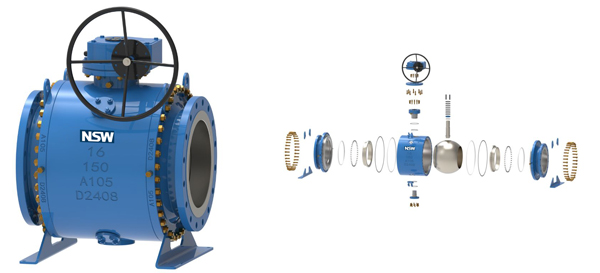
Material Costs – The Foundation of Ball Valve Price
- Body materials: Cast iron, brass, carbon steel (WCB, LCB), stainless steel (CF8, CF8M, 316L), and exotic alloys (Hastelloy, Monel, Inconel). Stainless steel typically adds 40–70% to the base cost compared to carbon steel.
- Ball and stem: Precision-ground stainless steel or chrome-plated brass. Higher hardness and corrosion resistance increase price.
- Seals and seats: PTFE (Teflon) is standard; reinforced PTFE, PEEK, or Devlon for high-temperature or abrasive media can double sealing costs.
*Example:* A carbon steel ball valve with PTFE seats may have a body material cost of ~$15, while the same size in 316 stainless steel can exceed $45 – purely from raw material.
Manufacturing Process and Precision
- Casting vs. forging: Forged ball valves offer higher strength and density but require more energy and machining, lifting ball valve price by 20–30% over cast equivalents.
- Machining tolerances: Valves meeting **ball valve standard** like API 6D or ISO 17292 demand tighter clearances (often ≤0.05mm), which increases CNC time and inspection cost.
- Surface finishing: Anti-corrosion coatings (e.g., electroless nickel plating on the ball) add $2–8 per unit in batch production.
Size, Pressure Rating, and End Connections
- Size (NPS ½” to 24”+): Price scales non-linearly. A 6” ball valve can cost 8–10 times more than a 1” valve due to material volume and casting complexity.
- Pressure class (PN16, PN40, Class 150, Class 600, Class 1500): Higher pressure requires thicker walls, heavier flanges, and longer stem seals – easily doubling the base price per step.
- End types: Threaded (NPT/BSP) ends are cheapest; socket weld adds ~10%; flanged ends add 30–50% due to extra forging and drilling operations.
Additional Features and Certifications
- Fire-safe design (API 607 / ISO 10497): Requires graphite secondary seals and special testing – adds 15–25% to ball valve price.
- Anti-static device, blow-out proof stem, locking handle: +5–12% total.
- NACE MR0175 (sour service) certification: Substantial material testing and documentation overhead – fixed fee per batch.
Understanding these components helps you answer: “Why does this ball valve manufacturer quote 30% higher than another?” – often because they include mandatory standards you actually need.
Ball Valve Price Differences Across Countries – A Global Reality Check
Ball valves are traded globally, but prices vary dramatically based on where they are manufactured, designed, and sold. Below is an honest breakdown – not stereotypes – based on 2024–2025 market data.
United States – Premium Price, Premium Assurance
- Typical range (2” stainless steel, Class 150 flanged, floating ball): $150 – $350
- Drivers: High labor rates ($50–80/hour for machinists), strict liability laws, costly ASME/U stamp certification, and brand legacy.
- Best for: Oil & gas, nuclear, military applications where traceability and fast local support are mandatory.
Germany & Western Europe – Engineering Precision
- Price range: €130 – €280 (equivalent $140–$305) for same spec
- Key factors: Heavy investment in automated production (making labor less dominant), adherence to DIN/EN standards, and higher material purity.
- Note: Many European ball valve manufacturers focus on niche markets – cryogenic, high-cycle pneumatic – which lifts prices further.
India – Low Labor, Inconsistent Quality
- Price range: $40 – $90 (2” stainless steel)
- Advantage: Very low hourly wages ($3–6), decent foundry infrastructure.
- Risk: Wide quality variation. Many Indian valves meet ball valve standard only on paper; seat materials and wall thickness frequently deviate. Savvy buyers require third-party inspection.
China – The Most Competitive Ball Valve Price Zone
- Price range (direct from China ball valve factory): $25 – $70 for the same 2” stainless steel floating ball valve.
- Why so low?
– Integrated supply chain: Casting, forging, machining, PTFE seals, handle – all within 50km in Wenzhou or Nan‘an.
– Massive scale: A single factory may produce 50,000 valves/month, spreading fixed costs.
– Lower but rising labor ($5–9/hour) and extremely competitive equipment utilization.
However, China ball valve is not a single quality level. Top-tier Chinese manufacturers (often ISO 9001 + API 6D certified) produce valves that pass fire-safe and NACE tests, but their prices are closer to $70–$100 – still 40% below Western equivalents.
> Real example: A 2” 316 stainless steel trunnion ball valve (Class 600) from a reputable US brand: $1,200. Same from a top-tier Chinese ball valve manufacturer: $480, including API 6D and fire-safe documents.
The Hidden Costs – Tariffs, Freight, and Incoterms
A lower ex-works **ball valve price** from China or India can vanish after adding:
- Sea freight (post-COVID rates: $1,500–3,000 per 20ft container)
- Import duties (e.g., US Section 301 tariffs on Chinese valves: 25%)
- Inspection agency fees (SGS, BV: $300–1,000 per order)
Always calculate landed cost and compare to domestic or near-shore options.
The Importance of Ball Valve Price – It’s Not Just a Number
Procurement managers who focus only on the lowest upfront ball valve price often pay three times more over the valve’s lifetime. Here is why price carries strategic weight.
Price as a Proxy for Safety and Reliability
A $20 2” ball valve from an unknown trader likely uses recycled scrap metal, undersized stems, and non-compliant PTFE (melts at 150°C instead of 260°C). In a petrochemical plant, a single valve failure can cost $500,000 in downtime, cleanup, and injury risk. The “expensive” certified valve suddenly looks cheap.
Total Cost of Ownership (TCO) vs. Purchase Price
TCO = Purchase price + Installation + Maintenance + Downtime cost + Energy loss (from leakage) + Disposal.
A well-made ball valve manufacturer‘s product may have a purchase price of $120 versus $60 for a low-end alternative. But if the $60 valve leaks after 2 years (requiring $200 in labor and process shutdown), the premium valve that lasts 15 years without leakage clearly wins.
Standards Enforce a Price Floor – And That’s Good
Ball valve standard like API 6D, BS 5351, or ISO 14313 mandate specific wall thicknesses, torque tests, and seat leakage rates. A valve claiming to meet these standards cannot be made for $25 – the raw materials and machining alone cost more. If you see a “API 6D certified” ball valve price that is too low, it is almost certainly counterfeit.
Thus, understanding price helps you verify authenticity: ask for test certificates and traceable material test reports (MTR). Reputable suppliers will provide them.
How to Choose the Right Ball Valve Price for Your Application
You now know the components and country variations. Here is a step-by-step method to select a **ball valve price** that delivers real value – not regrets.
Step 1 – Define Your Required Ball Valve Standard First
Before talking price, decide which **ball valve standard** applies to your industry:
- General industrial: ISO 17292 / ASME B16.34
- Pipeline (oil & gas): API 6D / ISO 14313
- Low-pressure water/air: Manufacturer standards (cheaper, but inspect carefully)
- Fire-safe: API 607 / ISO 10497
Write down the specific standard edition and any additional requirements (NACE, ATEX, SIL). This immediately filters out suppliers who cannot comply.
Step 2 – Request Itemized Quotes from 3–4 Ball Valve Manufacturers
Choose a mix: one established local brand (e.g., ValvTechnologies), one global mid-tier (e.g., KITZ), and two China ball valve suppliers that explicitly list their standards. Ask for:
- Material certification of body, ball, stem, seats
- Dimensional report (wall thickness per standard)
- Pressure test report (shell and seat test)
- If fire-safe: copy of original test report from certified lab
Compare these side-by-side. The cheapest without documents should be dismissed, regardless of ball valve price.
Step 3 – Evaluate Total Landed Cost and Lead Time
For offshore buyers, including China ball valve imports:
- Quote: FOB Shanghai or Ningbo (typically). Add sea freight ( ~ $400 per CBM?), customs clearance, and local delivery.
- Lead time: Chinese factories often 25–40 days for production + 30–45 days shipping to US/Europe.
Sometimes a slightly higher local price is justified by 2-week delivery versus 3 months.
Step 4 – Ask About Quality Control and Traceability
A trustworthy ball valve manufacturer will:
- Have ISO 9001:2015 certification (not just “in process”)
- Perform 100% hydrostatic testing before shipment
- Provide lot traceability – each valve’s serial number linked to raw material certs
If they cannot do this, no matter how tempting the ball valve price, walk away.
Step 5 – Use the “Price Per Safety” Rule
For critical applications (flammable gas, high pressure steam, toxic chemicals), do not optimize for lowest price. Instead, set a minimum ball valve standard (e.g., API 6D + fire-safe) and then find the most competitive supplier among those truly meeting it.
For non-critical water or air lines at low temperature/pressure, you can safely choose a lower-priced China ball valve that meets basic ISO 17292, but still request random sample testing.
The Role of the Ball Valve Manufacturer in Price Determination
Who you buy from is as important as the price tag. The **ball valve manufacturer**‘s business model directly affects final cost.
Types of Manufacturers and Their Price Structures
- Tier 1 brand manufacturers (Crane, Flowserve, Emerson): Highest price (often 3–5× commodity level). Includes extensive R&D, global support network, and liability coverage.
- Regional certified manufacturers (e.g., many in Italy, South Korea): Mid-high price, good quality, shorter lead time for nearby markets.
- Large-scale China ball valve factories (e.g., Neway, Xinfa, BM Engineering – but NOT trading companies): Low to mid price, capable of high quality if you specify ball valve standard and pay for third-party inspection.
- Small trading companies posing as manufacturers: Rock-bottom price, zero quality control, no actual production. Dangerous for anything beyond DIY water hoses.
How to Verify a Manufacturer
- Ask for factory audit video call (live, not recorded)
- Request references from other buyers in your industry
- Check if they hold API monogram (for API 6D valves) – this is expensive and only granted to serious shops
A genuine ball valve manufacturer will never be the absolute cheapest because they incur real costs for alloy, machining, and testing.
Frequently Asked Questions About Ball Valve Price
Q1: Why do ball valves of the same size and material have such different prices?
A: Differences in ball valve standard (API vs. non-standard), pressure class (Class 150 vs 300), seat material (plain PTFE vs reinforced PEEK), certification fees (NACE, fire-safe), and manufacturer reputation account for most variations. A cheap copy may look similar but fails quickly.
Q2: Are China ball valve products always lower quality?
A: No. Many China ball valve factories produce valves that pass API 6D and fire-safe tests at 40–50% lower price than Western brands. The key is to avoid uncertified traders and insist on documented ball valve standard compliance. China has top-tier and bottom-tier – you choose which tier.
Q3: How can I compare ball valve price quotes effectively?
A: Create a comparison table with columns: price, standard claimed, certifications provided, material of each component, lead time, and whether testing videos/photos are available. The lowest price usually disappears once you demand full compliance.
Q4: Is it worth paying more for a fire-safe ball valve?
A: If your application carries flammable or high-temperature fluids and is located inside a refinery, chemical plant, or fuel storage, yes – absolutely. Without fire-safe design, the valve will leak during a fire, feeding the flames. The added cost (typically 15–25%) is negligible compared to the risk.
Q5: What is the normal ball valve price markup from manufacturer to distributor?
A: Manufacturer sells ~2–4× direct material cost. Distributor adds 30–60% depending on stock and service. Buying directly from a ball valve manufacturer, especially a China ball valve factory, cuts out the middle layer.
Conclusion – Smart Ball Valve Price Selection Saves Money and Lives
Balancing ball valve price with technical requirements is not about finding the cheapest number – it is about finding the lowest price that still fully meets the ball valve standard you need, from a verified ball valve manufacturer.
China ball valve suppliers offer incredible value when sourced carefully: you can often save 40–60% compared to Western brands, but only if you enforce proper documentation and testing. Ignore those who sell “API 6D equivalent” without certification.
Use the steps in this guide: define your standard, request itemized quotes, calculate landed cost, and validate the manufacturer. When you do, the right ball valve price emerges naturally – one that protects your budget, your process, and your people.
> *Need a starting point? Request quotes from three pre-vetted ball valve manufacturers – at least one from China and one local – and compare their offers using the template above. That 30-minute exercise will save you thousands over the next five years.*
Post time: May-12-2026