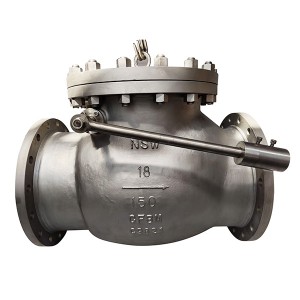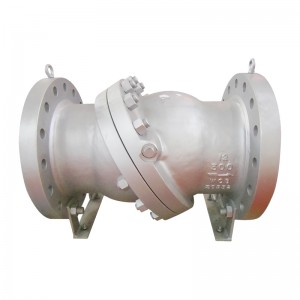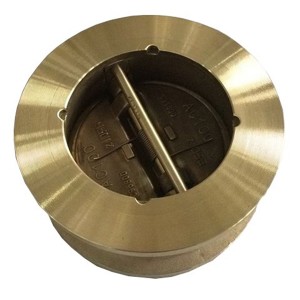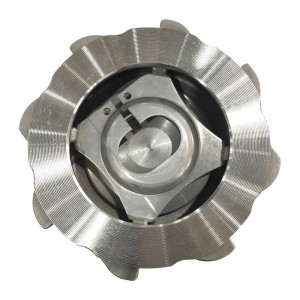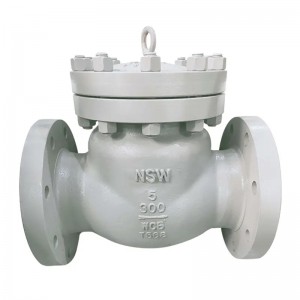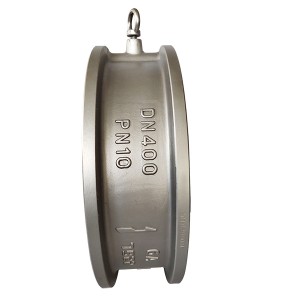


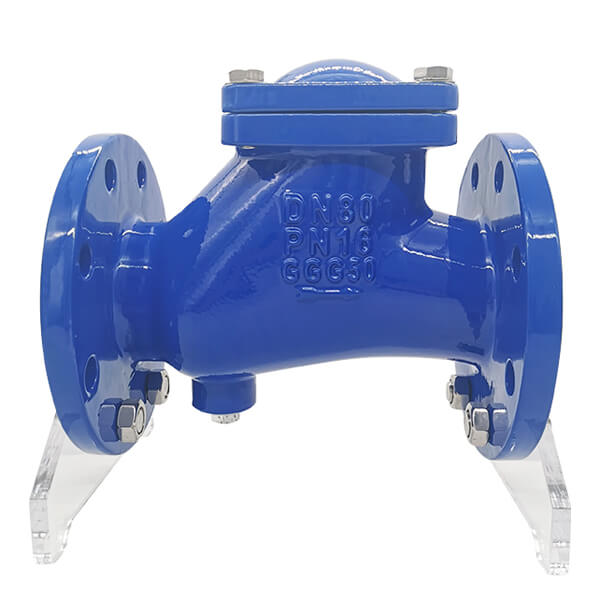
Ball Check Valve
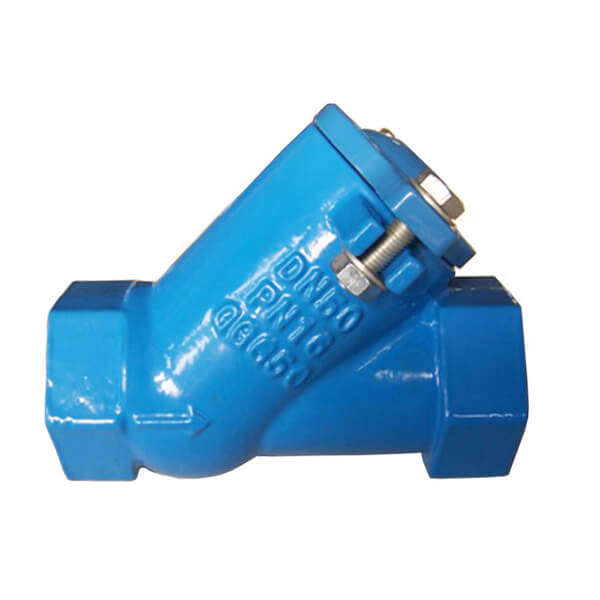
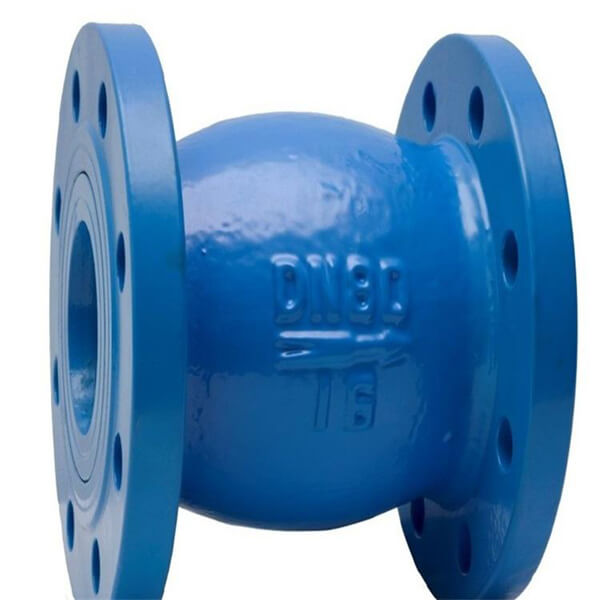
Backflow is a real headache in piping systems. When a pump stops, the fluid rushes backward. That sudden reverse flow can damage pumps, meters, and even burst pipes. A ball check valve is a simple, reliable solution to this problem.
If you’re looking for a non-return valve for water treatment, chemical dosing, or irrigation, this guide will help you understand exactly what a ball check valve does and how to choose the right one.
What Is a Ball Check Valve?
A ball check valve uses a free-floating ball to allow flow in one direction and block it in the opposite direction. Think of it as a one-way door. When fluid flows forward, it pushes the ball off its seat. When flow stops or tries to reverse, the ball is forced back onto the seat, creating a tight seal.
The key feature? The ball is the only moving part. No springs, no hinges, no diaphragms. That simplicity makes ball check valves incredibly durable.
How Does a Ball Check Valve Work?
It’s simple. Inside the valve body there’s a ball – usually solid metal, hollow stainless steel, or rubber-coated. The ball sits on a seat.
- Forward flow: Fluid pressure lifts the ball off the seat. The ball rolls aside, and fluid passes through the space between the ball and the body.
- Reverse flow: Back pressure pushes the ball back onto the seat. The harder the reverse flow tries, the tighter the ball seals.
Some designs use guide ribs or a chamber inside the body to keep the ball centered and moving smoothly.
Key Advantages of Ball Check Valves
Compared to swing check valves or lift check valves, ball check valves offer several practical benefits:
1. Excellent sealing, minimal leakage
The ball contacts the seat along a line or a narrow ring. When both surfaces are well finished, you get near-zero leakage. Swing check valves often leak when debris gets stuck under the disc – less of a problem here.
2. Tolerant to dirty media
The ball rotates and rolls as fluid flows. That rolling action tends to knock off small particles. For wastewater or recirculated water with some solids, ball check valves are far more forgiving than many other designs.
3. Low pressure drop
When fully open, the ball sits completely out of the flow path. The bore is almost full-sized, so pressure loss is much lower than in lift check valves.
4. Works horizontally, and vertically (with caution)
A standard free-floating ball check valve is for horizontal lines. But spring-assisted versions exist for vertical upward flow. More on that later.
5. Very easy to maintain
Remove the cover, take out the ball, wipe it clean, inspect the seat – that’s it. One person can do it in ten minutes.
Common Materials and What Fluids They Handle
Choosing the right material makes all the difference. Here are the most common combinations used in the field:
| Ball Material | Body Material | Typical Media |
|---|---|---|
| Stainless steel (304/316) | Stainless steel (CF8/CF8M) | Corrosive liquids, mild acids, solvents, oils |
| Rubber-coated ball (EPDM/NBR) | Cast iron or ductile iron | Sewage, seawater, slurries with small solids |
| Solid PTFE or PFA-coated ball | Lined valve body | Strong acids, strong alkalis, high-purity chemicals |
| Brass ball | Brass or bronze | Clean water, low-pressure air, fuel oil |
A real-world tip: If your media contains fibrous stuff – like paper pulp or textile fibers – the ball can get wrapped. In that case, don’t use a ball check valve. Go with a knife gate valve or a duckbill check valve. Ball check valves work best with granular or rolling solids.
Typical Applications (Where You’ll Find Them)
- Water treatment and supply systems – Pump discharge lines to prevent water hammer damage.
- Irrigation and agriculture – Field pump outlets. Cheap, tough, and sand won’t kill them easily.
- Chemical dosing – Metering pump discharge. Works with a backpressure valve to prevent backflow into chemical tanks.
- Food and beverage – Stainless steel versions. Suitable for CIP return lines.
- Marine and offshore – Ballast lines, bilge systems. Resists seawater corrosion.
- Wastewater treatment – Sludge lines from primary clarifiers, air lines for diffusers (use rubber-coated ball).
How to Select the Right Ball Check Valve – Five Questions
Before you buy, ask yourself these questions:
1. Does the media have large particles or fibers?
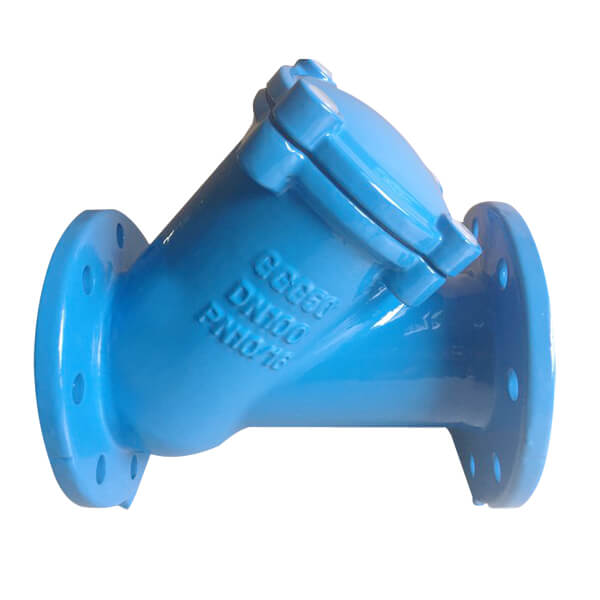
Fibers → avoid ball check valves. Hard particles (sand, welding slag) → fine, but install a Y-strainer upstream.
2. Horizontal or vertical installation?
Horizontal → standard free-floating type. Vertical with upward flow → you need a spring-assisted model (some call it a vertical ball check valve).
3. What are the temperature and pressure?
Clean water below 80°C (176°F) → cast iron body with rubber-coated ball. High temperature (above 150°C / 302°F) → full stainless steel with a metal-seated ball.
4. Frequent cycling?
If the valve opens and closes dozens of times per hour, the ball and seat will wear quickly. For high cycling rates, consider a silent check valve or a spring-loaded check valve.
5. What size?
Ball check valves are typically made up to DN300 (12 inches). Larger than that, the ball becomes too heavy for reliable sealing.
Installation and Maintenance – Don’t Make These Mistakes
Installation Tips
- Follow the flow arrow – It’s cast into the body. Install it backward and you have no check function at all.
- Horizontal line? Cover goes up – The ball needs gravity to fall back onto the seat. If you mount the cover down, the ball will fall away from the seat and leak.
- Don’t bolt it directly to a pump outlet – Leave a straight pipe run (at least 5 pipe diameters) between the pump and the valve. Turbulence right at the pump can make the ball bounce and wear fast.
- Threaded connections – When using PTFE tape, don’t let tape shreds get inside. Those shreds can jam the ball.
Routine Maintenance
Ball check valves are almost maintenance-free. But watch for these signs that something is wrong:
- A continuous “gurgling” sound after the pump stops
- Downstream pressure gauge drops slowly
- A rhythmic metallic knocking sound
How to inspect and clean:
1. Depressurize and drain the line.
2. Remove the cover bolts. Take out the ball and the seat seal.
3. Check the ball surface for pits, scratches, or uneven wear.
4. Inspect the seat sealing surface for grooves.
5. Clean everything. Minor seat wear can be lapped. For heavy wear, replace both the seat and the ball.
6. A note on cheap valves: many use hollow stainless steel balls. Over time, they can corrode from the inside and collapse. Go with solid balls or fully rubber-coated balls when possible.
Frequently Asked Questions (FAQ)
Q: Can a ball check valve be installed vertically?
A: The standard free-floating type is for horizontal lines only. For vertical lines with upward flow, you must use a spring-assisted vertical ball check valve. Otherwise, the ball will just fall onto the seat and never open.
Q: Does it prevent water hammer?
A: No. A ball check valve actually closes relatively fast, which can create a small water hammer. If you have a long pipeline with high flow velocity, consider a slow-closing check valve or install a water hammer arrestor.
Q: Rubber-coated ball vs stainless steel ball – which is better?
A: It depends on the fluid. Clean water or sewage → rubber-coated ball gives better sealing and costs less. High temperature, oils, or chemicals → full stainless steel. Never use rubber-coated balls with solvents or hot steam.
Q: Why is my ball check valve leaking after only six months?
A: Most likely erosion from hard particles in the media – sand, rust, or scale. The ball and seat get worn. Solution: install a strainer upstream, or switch to a hardened seat material (stellite or ceramic).
Q: What is the minimum cracking pressure?
A: For a free-floating ball check valve, it’s typically 0.005 – 0.03 MPa (about 0.05 – 0.3 bar). That’s roughly 0.5 to 3 meters of water column. For gravity flow systems, that’s easy to achieve.
A ball check valve isn’t high-tech. But it’s reliable, affordable, and easy to fix. That’s why so many engineers choose it for clean water, sewage, and mild chemical services. Get three things right – media type (no fibers), installation orientation, and material compatibility – and a ball check valve will easily last five to ten years.
——————
If you have a specific application (size, fluid, temperature, pressure) and you’re not sure whether a ball check valve is the right choice, describe your pipeline conditions. Please contact our Technical and Sales departments.
Materials of Newsway Valve Manufacturer Products
The China Valve Manufacturer from China, its valves body and trim material can be offered in Forged type and Casting type. Next to Stainless Steel and Carbon Steel material, we also manufacture valves in special materials such as titanium, nickel alloys, HASTELLOY®*, INCOLOY®, MONEL®, Alloy 20, super-duplex, corrosion resistant alloys and urea grade materials.
Available Valve Materials
| Tradename | UNS nr. | Werkstoff nr. | Forging | Casting |
| Carbon steel | K30504 | 1.0402 | A105 | A216 WCB |
| Carbon steel | 1.046 | A105N | ||
| Low Temp Carbon steel | K03011 | 1.0508 | A350 LF2 | A352 LCB |
| High Yield steel | K03014 | A694 F60 | ||
| 3 1/2 Nickel steel | K32025 | 1.5639 | A350 LF3 | A352 LC3 |
| 5 Chrome, 1/2 Moly | K41545 | 1.7362 | A182 F5 | A217 C5 |
| 1 1/4 Chrome, 1/2 Moly | K11572 | 1.7733 | A182 F11 | A217 WC6 |
| K11597 | 1.7335 | |||
| 2 1/4 Chrome, 1/2 Moly | K21590 | 1.738 | A182 F22 | A217 WC9 |
| 9 Chrome, 1 Moly | K90941 | 1.7386 | A182 F9 | A217 CW6 |
| X 12 Chrome, 091 Moly | K91560 | 1.4903 | A182 F91 | A217 C12 |
| 13 Chrome | S41000 | A182 F6A | A351 CA15 | |
| 17-4PH | S17400 | 1.4542 | A564 630 | |
| 254 SMo | S31254 | 1.4547 | A182 F44 | A351 CK3MCuN |
| 304 | S30400 | 1.4301 | A182 F304 | A351 CF8 |
| 304L | S30403 | 1.4306 | A182 F304L | A351 CF3 |
| 310S | S31008 | 1.4845 | A182 F310S | A351 CK20 |
| 316 | S31600 | 1.4401 | A182 F316 | A351 CF8M |
| S31600 | 1.4436 | |||
| 316L | S31603 | 1.4404 | A182 F316L | A351 CF3M |
| 316Ti | S31635 | 1.4571 | A182 F316Ti | |
| 317L | S31703 | 1.4438 | A182 F317L | A351CG8M |
| 321 | S32100 | 1.4541 | A182 F321 | |
| 321H | S32109 | 1.4878 | A182 F321H | |
| 347 | S34700 | 1.455 | A182 F347 | A351 CF8C |
| 347H | S34709 | 1.4961 | A182 F347H | |
| 410 | S41000 | 1.4006 | A182 F410 | |
| 904L | N08904 | 1.4539 | A182 F904L | |
| Carpenter 20 | N08020 | 2.466 | B462 N08020 | A351 CN7M |
| Duplex 4462 | S31803 | 1.4462 | A182 F51 | A890 Gr 4A |
| SAF 2507 | S32750 | 1.4469 | A182 F53 | A890 Gr 6A |
| Zeron 100 | S32760 | 1.4501 | A182 F55 | A351 GR CD3MWCuN |
| Ferralium® 255 | S32550 | 1.4507 | A182 F61 | |
| Nicrofer 5923 hMo | N06059 | 2.4605 | B462 N06059 | |
| Nickel 200 | N02200 | 2.4066 | B564 N02200 | |
| Nickel 201 | N02201 | 2.4068 | B564 N02201 | |
| Monel® 400 | N04400 | 2.436 | B564 N04400 | A494 M35-1 |
| Monel® K500 | N05500 | 2.4375 | B865 N05500 | |
| Incoloy® 800 | N08800 | 1.4876 | B564 N08800 | |
| Incoloy® 800H | N08810 | 1.4958 | B564 N08810 | |
| Incoloy® 800HT | N08811 | 1.4959 | B564 N08811 | |
| Incoloy® 825 | N08825 | 2.4858 | B564 N08825 | |
| Inconel® 600 | N06600 | 2.4816 | B564 N06600 | A494 CY40 |
| Inconel® 625 | N06625 | 2.4856 | B564 N06625 | A494 CW 6MC |
| Hastelloy® B2 | N10665 | 2.4617 | B564 N10665 | A494 N 12MV |
| Hastelloy® B3 | N10675 | 2.46 | B564 N10675 | |
| Hastelloy® C22 | N06022 | 2.4602 | B574 N06022 | A494 CX2MW |
| Hastelloy® C276 | N10276 | 2.4819 | B564 N10276 | |
| Hastelloy® C4 | N06455 | 2.461 | B574 N06455 | |
| Titanium GR. 1 | R50250 | 3.7025 | B381 F1 | B367 C1 |
| Titanium GR. 2 | R50400 | 3.7035 | B381 F2 | B367 C2 |
| Titanium GR. 3 | R50550 | 3.7055 | B381 F3 | B367 C3 |
| Titanium GR. 5 | R56400 | 3.7165 | B381 F5 | B367 C5 |
| Titanium GR. 7 | R52400 | 3.7235 | B381 F7 | B367 C7 |
| Titanium GR. 12 | R53400 | 3.7225 | B381 F12 | B367 C12 |
| Zirconium® 702 | R60702 | B493 R60702 | ||
| Zirconium® 705 | R60705 | B493 R60705 |