


If you are comparing a **Pressure Sealed Bonnet Gate Valve** with a **Bolted Bonnet Gate Valve** for a high-pressure steam, hydrocracker, boiler feed, gas injection, or offshore project, the decision usually comes down to pressure class, thermal cycling, weight limits, maintenance strategy, and low-pressure tightness requirements.
> **Quick answer:**
> Use a **Bolted Bonnet Gate Valve** for ASME Class 150–600, lower-temperature, low-pressure, and applications where field maintenance simplicity matters most.
> Use a **Pressure Sealed Bonnet Gate Valve** for ASME Class 900, 1500, 2500, and above, especially in high-temperature steam, high-pressure gas, thermal cycling, and weight-restricted offshore or skid-mounted systems.
**Need a factory-direct recommendation?** Send your datasheet to [sales@nswvalve.com]. Our engineering team will review your P-T rating, medium, end connection, and operation mode, then recommend the correct bonnet design.
—
## Bolted Bonnet Gate Valve: Traditional, Simple, Cost-Effective
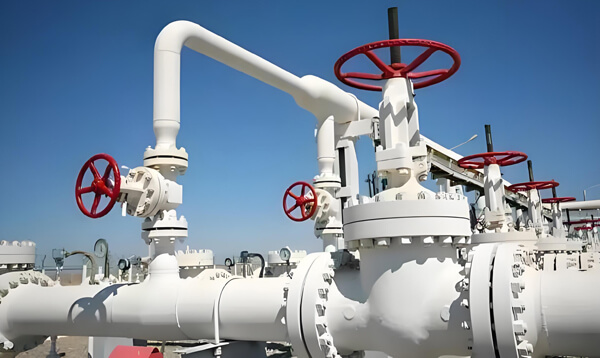
A **Bolted Bonnet Gate Valve** uses stud bolts and nuts to clamp the bonnet to the valve body. A flat graphite gasket, spiral-wound gasket, or metallic ring joint gasket is compressed between the body and bonnet flanges.
“`
BOLTED BONNET SEALING MECHANISM
┌─────────────────────────────────────────────────────────────────┐
│ Gland Flange Assembly │
│ │ │
│ ┌────────────────┴────────────────┐ │
│ │ Bonnet Stud Bolts & Nuts │ (Mechanical │
│ ├─────────────────────────────────┤ Bolting Torque │
│ │ Body-to-Bonnet Joint Flange │ Compresses │
│ ├─────────────────────────────────┤ Gasket) │
│ │ Flat / Spiral-Wound Gasket │ │
│ └────────────────┬────────────────┘ │
│ │ │
│ Valve Body Neck │
└─────────────────────────────────────────────────────────────────┘
“`
### How It Seals
The seal depends on **external bolt pre-load**. The studs must compress the gasket enough to resist internal line pressure. If bolt torque is lost, the joint can leak.
### Advantages
- **Easy field maintenance:** The bonnet can be unbolted to access the wedge, stem, and seat rings.
– **Good low-pressure tightness:** It does not rely on internal pressure to energize the gasket.
– **Cost-effective for Class 150–600:** It is economical for utility, water, low-pressure gas, and general process lines.
– **Widely understood:** Most maintenance teams already have torque tools and procedures.
### Limitations
- **Thermal relaxation:** Repeated thermal cycling can stretch studs and reduce bolt load.
– **Heavy at high pressure:** Above Class 900, flange thickness, bolt diameter, and body weight become excessive.
– **Periodic re-torque:** High-temperature service may require controlled bolt re-tightening.
—
## Pressure Sealed Bonnet Gate Valve: Self-Energizing for Severe Service
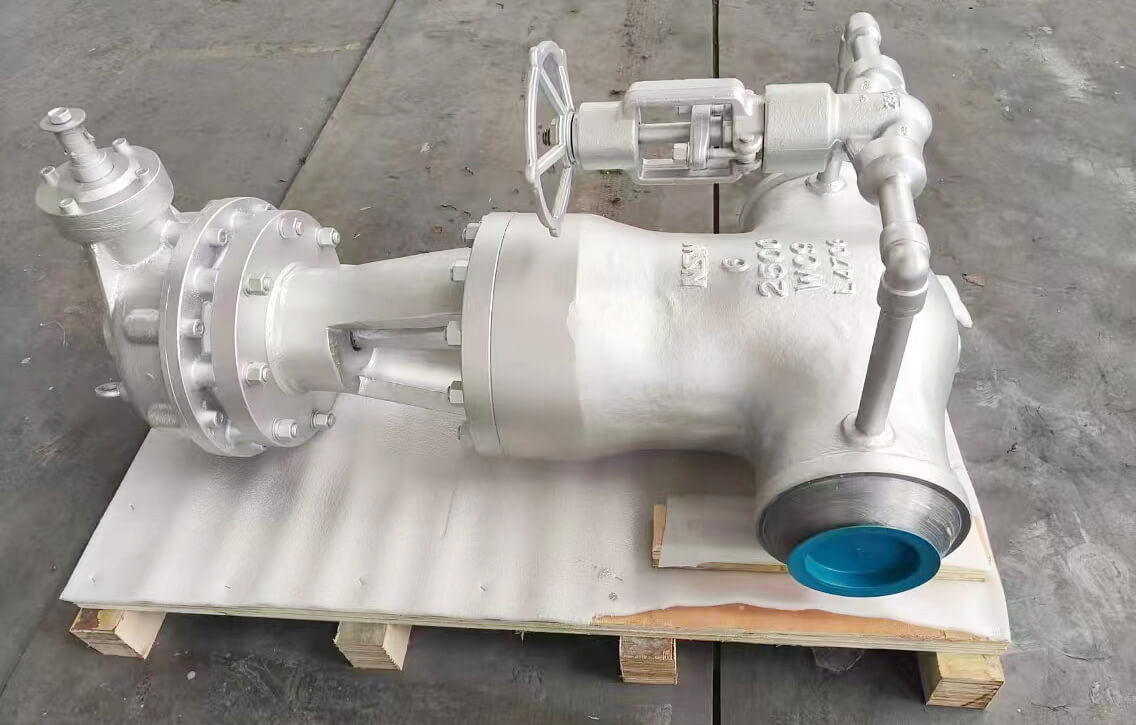
A **Pressure Sealed Bonnet Gate Valve**, also called a **Pressure Seal Gate Valve**, uses internal line pressure to energize the body-to-bonnet seal. The bonnet sits inside the body neck. As pressure rises, the bonnet is pushed upward against a flexible graphite or silver-plated metallic gasket. The gasket is wedged between the bonnet taper and a segment retaining ring.
“`
PRESSURE SEALED BONNET SEALING MECHANISM
┌─────────────────────────────────────────────────────────────────┐
│ Yoke & Stem Assembly │
│ │ │
│ ┌───────────────┴───────────────┐ │
│ │ Retaining Nut / Thrust Ring │ │
│ ├───────────────────────────────┤ │
│ │ Four-Piece Segment Ring │ │
│ ├───────────────────────────────┤ (Internal Line │
│ │ Flexible Graphite / Metallic│ Pressure Pushes │
│ │ Pressure Seal Gasket │ Bonnet Upward │
│ ├───────────────────────────────┤ Against Gasket) │
│ │ Pressure Seal Body Neck │ │
│ └───────────────┬───────────────┘ │
│ │ │
│ Wedge & Seat Ring │
└─────────────────────────────────────────────────────────────────┘
“`
### How It Seals
The higher the internal pressure, the tighter the bonnet gasket is compressed. This is why pressure seal designs are preferred in Class 900 and above, especially where pressure surges and thermal spikes can cause bolted joints to relax.
### Advantages
- **Self-energizing seal:** Higher line pressure creates a tighter body-to-bonnet seal.
– **Compact and lighter:** Eliminates heavy body flanges and large stud bolting. In high-pressure lines, weight can be reduced by approximately 30%–50% compared with bolted designs.
– **Excellent thermal shock resistance:** The seal tightens as temperature and pressure rise.
– **Lower fugitive emission risk at the bonnet joint:** Less dependence on bolt torque retention.
### Limitations
- **Low-pressure sensitivity:** The gasket needs a minimum internal pressure to fully energize. In low-pressure or drain conditions, minor weeping can occur if the valve is not correctly pre-loaded.
– **More complex maintenance:** Disassembly requires proper pulling tools and careful handling of the segment ring and body bore.
– **Not ideal for cryogenic service:** Extended bolted bonnets are usually preferred for LNG and cryogenic lines.
**Factory experience note:** In pressure seal valves, the segment ring installation and gasket pre-load are critical. If the segment ring is not fully seated, or if the body bore is scratched during assembly, the valve may pass the initial hydro test but weep later at low pressure. NSW Valve controls this by [insert actual assembly procedure, e.g., cleaning and inspecting the body bore, using a calibrated gasket pre-load tool, and recording segment ring seating before final assembly].
—
## Side-by-Side Comparison: Pressure Sealed Bonnet vs Bolted Bonnet
| Technical Parameter | Bolted Bonnet Gate Valve | Pressure Sealed Bonnet Gate Valve |
|—|—|—|
| Primary pressure classes | ASME Class 150, 300, 600; sometimes 900 | ASME Class 900, 1500, 2500, 4500 |
| Sealing force source | External bolt torque | Internal line pressure, self-energizing |
| Gasket location | External body-bonnet flange interface | Internal body neck bore cavity |
| Weight and footprint | Heavy and bulky at high pressure | Compact and lighter at high pressure |
| Thermal cycling behavior | Bolt relaxation and joint creep possible | Seal tightens as heat and pressure rise |
| Low-pressure tightness | Excellent, independent of line pressure | Requires minimum pressure or correct pre-load |
| Maintenance complexity | Low, standard torque tools | Moderate to high, requires internal pulling tools |
| Cryogenic service | Extended bolted bonnet preferred | Not typically preferred |
| Typical applications | Refineries, water treatment, low-pressure gas | Supercritical steam, high-pressure steam, gas injection |
| Fugitive emission control | Depends on bolt load and packing | Bonnet joint less dependent on bolt load; packing still critical |
—
## Selection Criteria for EPC Procurement
### 1. Pressure and Temperature Rating
Choose **Bolted Bonnet** for:
- ASME Class 150, 300, and 600;
– Operating temperatures below approximately +400°C;
– Systems that frequently drop to low or atmospheric pressure;
– Utility water, cooling water, low-pressure gas, and general process lines.
Choose **Pressure Sealed Bonnet** for:
- ASME Class 900, 1500, 2500, and above;
– Superheated steam, boiler feed water, hydrocracker, and high-pressure gas injection;
– High-temperature service where bolt relaxation is a concern;
– Thermal cycling or pressure surge conditions.
### 2. Weight and Space Limits
On offshore platforms, FPSO vessels, and skid-mounted refinery units, weight and space are major cost drivers. A **Pressure Sealed Bonnet Gate Valve** reduces structural support requirements because it eliminates heavy body flanges and large bolting.
### 3. Low-Pressure Tightness
If the valve must seal tightly at very low pressure or during drain-down, a bolted bonnet may be safer. Pressure seal valves require either a minimum line pressure or a correctly pre-loaded gasket to prevent low-pressure weeping.
### 4. Maintenance Strategy
If your team needs fast access to the wedge and seat rings with standard tools, choose bolted bonnet. If you accept specialized tools and procedures in exchange for high-pressure performance, choose pressure seal.
### 5. Fugitive Emissions and Packing
Bonnet type does not replace packing quality. For both designs, specify:
- Live-loaded Belleville spring assemblies;
– Precision-ground stems, Ra ≤ 0.4 µm;
– ISO 15848-1 or API 622 qualified packing;
– Proper gland bolt torque and re-tightening procedure.
For material selection by class, see:
[API 600 Class 2500 Gate Valve Material Selection](/api-600-class-2500-gate-valve-material-selection).
—
## What to Verify in a Gate Valve Factory
A **gate valve manufacturer** can show a catalogue. A qualified **high-pressure gate valve factory** must prove process control. Verify these points before placing a PO:
- **Material traceability:** 100% PMI on forged alloy bodies such as ASTM A182 F11, F22, F91, and F316, with EN 10204 3.1 MTRs.
– **Hardfacing quality:** Stellite No. 6 overlays on wedge and seat faces, with PT inspection after welding.
– **Pressure testing:** Hydrostatic shell and seat testing per API 598 / ASME B16.34, plus high-pressure nitrogen testing where specified.
– **Pressure seal assembly control:** Documented gasket pre-load, segment ring seating, and body bore inspection.
– **Documentation:** MTRs, PMI reports, API 598 certificates, NDT reports, and COC.
– **Certification scope:** Confirm that API 600, API 6D, ISO 15848-1, and CE/PED certificates cover the actual valve type and pressure class.
For a related factory checklist, see:
[High-Pressure Gate Valve Manufacturer & Supplier](/high-pressure-gate-valve-manufacturer-supplier).
—
## Project Snapshot: [Replace with a Real Completed Project]
> **Application:** [High-pressure steam header / hydrocracker / gas injection]
> **Location:** [Country / Region]
> **Valve supplied:** NPS [X], Class [900/1500/2500], **Pressure Sealed Bonnet Gate Valve**
> **Body material:** A182 [F22/F91/F316], forged
> **Trim:** Stellite No. 6 full overlay, API Trim 5
> **Packing:** Flexible graphite, ISO 15848-1 qualified
> **Testing:** API 598 hydrostatic and high-pressure nitrogen test
> **Result:** [X] valves delivered in [Month/Year]; after [X] months in service, no bonnet joint leakage reported.
> **Client reference:** [Available upon request / Insert approved reference]
If you need a similar valve, send your datasheet to [sales@nswvalve.com].
—
## Frequently Asked Questions
### Can a Pressure Sealed Bonnet Gate Valve leak at low pressure?
Yes, it can weep at low pressure if the internal pressure is too low to energize the gasket. Qualified manufacturers prevent this by pre-loading the gasket during assembly using knock-down studs, spring washers, or a controlled assembly procedure. The valve should be specified with this requirement when low-pressure tightness is critical.
### Which bonnet type is better for thermal cycling?
Pressure sealed bonnet is generally better for severe thermal cycling. The seal becomes tighter as pressure and temperature rise, and it does not rely on bolt torque retention. Bolted bonnets can suffer stud relaxation and joint creep under repeated thermal cycles.
### Which bonnet type is easier to maintain?
Bolted bonnet is easier to maintain. It can be opened with standard torque tools, and internal parts are easier to access. Pressure sealed bonnet requires specialized pulling tools and careful handling of the segment ring and body bore.
### Is a Pressure Sealed Bonnet Valve suitable for cryogenic service?
Usually no. Pressure seal designs are optimized for high-pressure, high-temperature service. For cryogenic service such as LNG, extended bolted bonnets are typically preferred to keep the packing away from extreme cold and allow easier gasket inspection.
### What standards govern these valves?
Key standards include API 600, API 602, ASME B16.34, API 6D, API 598, ISO 15848-1, and API 622. For sour service, NACE MR0175 / ISO 15156 may also apply.
### Can NSW Valve supply both Pressure Sealed Bonnet and Bolted Bonnet Gate Valves?
Yes. NSW Valve supplies both designs from NPS ½” to 36” (DN15–DN900), covering ASME Class 150 through Class 2500 and API 3000–10000 where applicable. Send your datasheet to [sales@nswvalve.com] for a factory-direct quotation.
—
## Request a Factory-Direct Quotation
Looking for a qualified **gate valve manufacturer** for **Pressure Sealed Bonnet Gate Valves** or **Bolted Bonnet Gate Valves**?
**NSW Valve**
Address: [Factory Address]
Email: [sales@nswvalve.com]
Phone: [Phone]
WhatsApp/WeChat: [Number]
LinkedIn: [Company LinkedIn URL]
Website: [https://nswvalve.com](https://nswvalve.com)
- **Product Spectrum:** ½” to 36” (DN15–DN900)
– **Pressure Ratings:** Class 150 to Class 2500 / API 3000–10000
– **Bonnet Options:** Bolted Bonnet and **Pressure Sealed Bonnet Gate Valve**
– **Body Materials:** Forged A105, A182 F11/F22/F91/F316, Duplex F51/F53
– **Certifications:** [ISO 9001, CE/PED, ISO 15848-1 — list only actual certifications]
Post time: Sep-24-2026