


Most Butterfly Valve specification errors do not surface during commissioning. They surface 6 to 18 months later, when a PTFE-seated double offset valve in a 420°C steam header begins leaking through the seat, or when a concentric valve in a seawater cooling loop corrodes at the disc-stem interface. By then, the replacement cost—shutdown labor, lost production, emergency procurement—dwarfs the original price difference between the specified valve and the correct one.
This guide addresses the selection decision that causes most of these failures: offset geometry and seat material pairing. It is written for process engineers, EPC procurement specialists, and maintenance planners who need to specify an industrial butterfly valve that will still hold bubble-tight after three years in service.
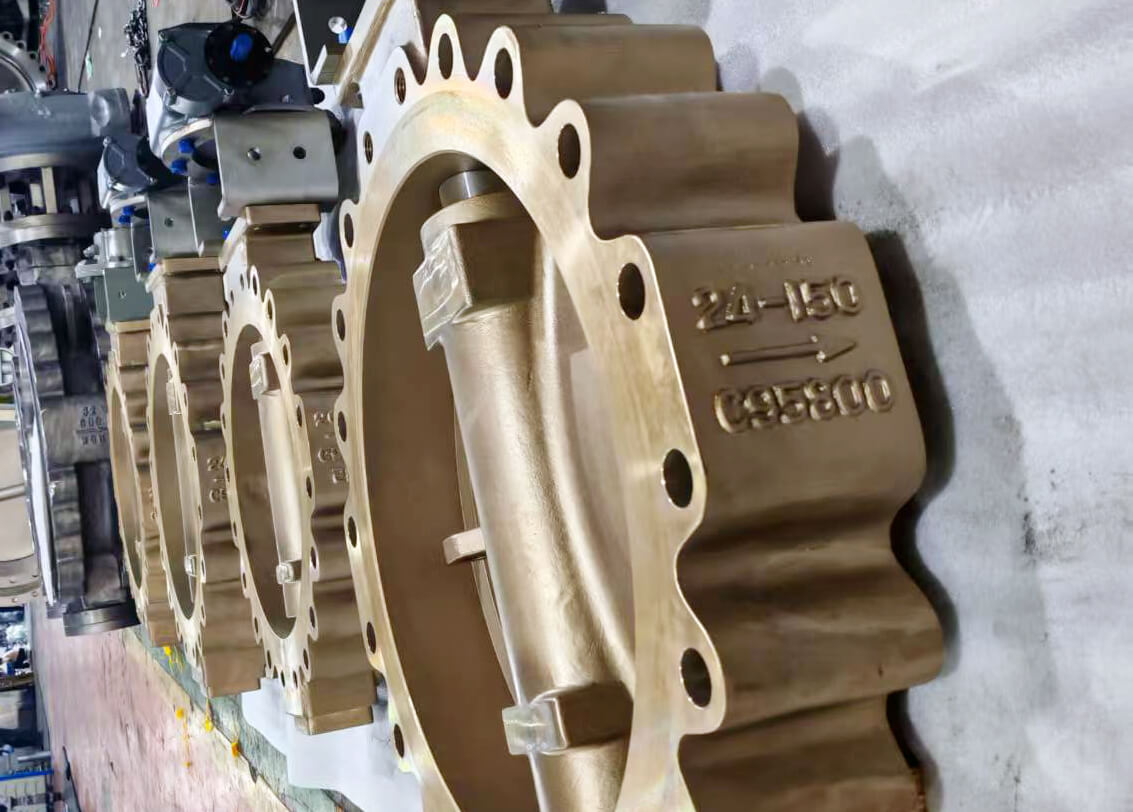
Why Most Butterfly Valve Failures Trace Back to Seat Selection, Not Body Material
A common specification pattern in EPC projects reads: “Body: ASTM A216 WCB; Disc: CF8M; Seat: PTFE.” This specification says nothing about the actual failure mode. In a steam service at 250°C with thermal cycling, the PTFE seat will cold-flow, losing preload. The WCB body will perform exactly as rated. The failure is not in the body material. It is in the assumption that “PTFE” is a sufficient seat description.
The engineering question is not “what material is the seat?” It is: under the actual pressure-temperature cycle profile, will the seat maintain sufficient elastic recovery to prevent leakage between maintenance intervals? Answering that question requires knowing the offset geometry, the seat material’s compression set behavior, and the differential thermal expansion between disc and body.
What Changed in API 609 10th Edition (Effective December 2026)
API Standard 609 governs butterfly valve design, materials, face-to-face dimensions, pressure-temperature ratings, and inspection requirements for double-flanged, lug-type, and wafer-type valves. The 10th Edition became effective on December 1, 2026. Facilities holding API 609 Monogram licenses must incorporate the new edition into their quality management systems and train affected personnel by that date.
For buyers, the practical implication is procurement language. If your RFQ or purchase order references “API 609” without specifying edition, suppliers may quote against either the 9th Edition (April 2021) or the 10th Edition (May 2026). Clarify the edition in the RFQ to avoid receiving valves certified to a superseded standard.
Double Offset vs. Triple Offset: The Engineering Difference That Determines Cycle Life
The distinction between double offset and triple offset is not marketing language. It is a geometric difference that determines whether the seat experiences friction during every actuation cycle.
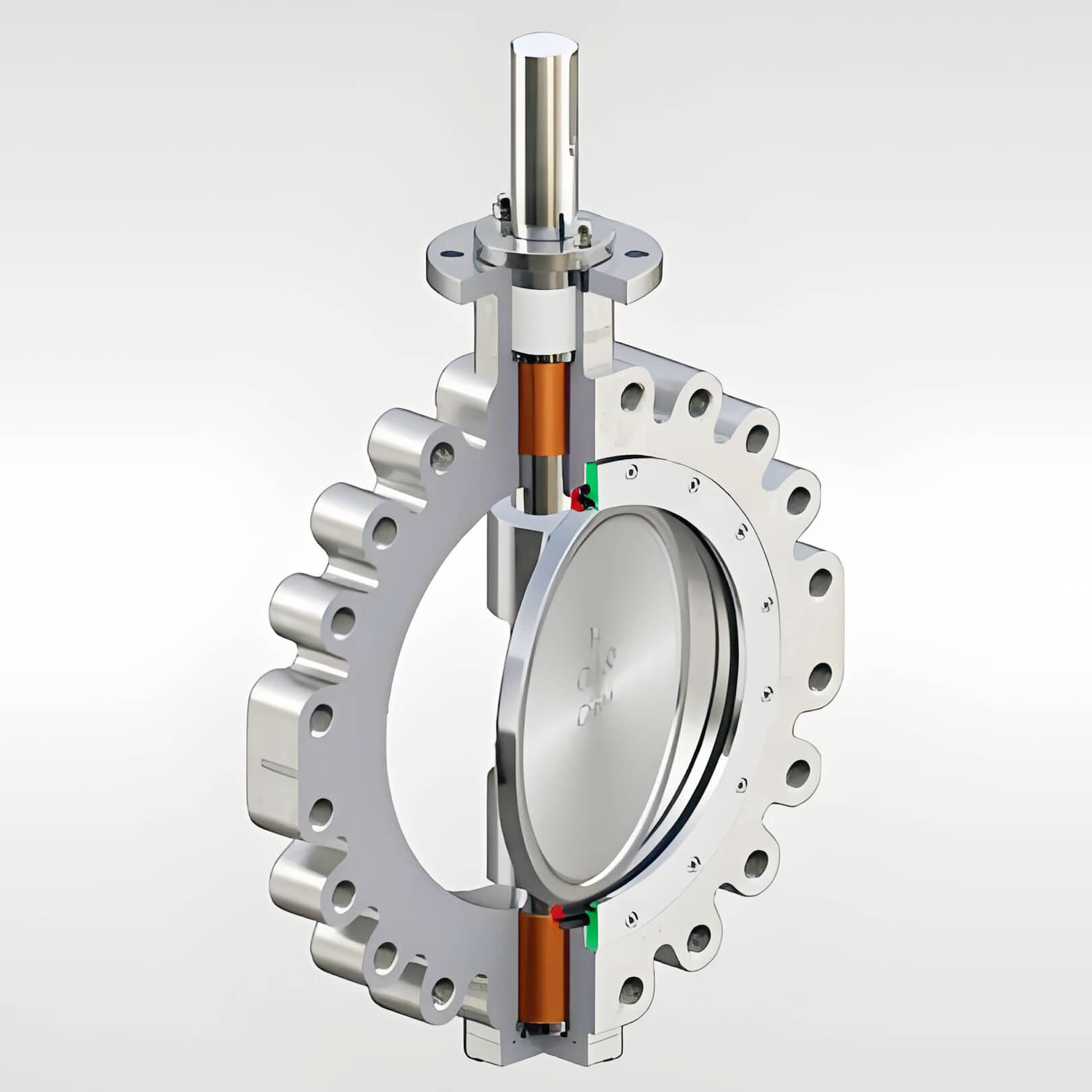
Double offset (dual eccentric) design. The stem is offset from both the disc centerline and the body seal centerline. During opening, the disc lifts away from the seat before rotating. This cam-action reduces seat friction during the first few degrees of travel. However, the seat still contacts the disc during the final portion of closing. For soft-seated double offset valves operating at moderate temperatures (below 200°C) with clean media, this design provides reliable bidirectional sealing and extends cycle life compared to concentric valves.
Triple offset design. A third angular offset is applied to the seat cone geometry. The sealing surfaces contact only at the final 1° to 2° of rotation, creating a frictionless, metal-to-metal wedge fit. This geometry eliminates sliding friction across the entire stroke, which is why triple offset valves achieve cycle counts exceeding 50,000 with metal seats. It is also why they can maintain zero-leakage performance in thermal cycling service where soft seats would fail.
| Parameter | Double Offset (Soft Seat) | Triple Offset (Metal Seat) |
|---|---|---|
| Seat contact | Cam-action, partial stroke contact | Frictionless, final-degree contact only |
| Pressure class | ASME Class 150 / 300 / 600 | ASME Class 150 / 300 / 600 / 900 / 2500 |
| Temperature range | -29°C to 204°C (PTFE/RPTFE) | -254°C to 750°C (metal-to-metal) |
| Fire-safe | Requires secondary metal backup | Inherently fire-safe (API 607) |
| Primary advantage | Cost-effective for utility service | Zero-leakage in severe thermal/pressure cycling |
| Typical limitation | Soft seat cold-flow above 200°C | Higher torque, higher unit cost |
Seat Material Selection: EPDM, PTFE, and Metal at Real Temperature Limits
EPDM (ethylene propylene diene monomer). Continuous service range: -29°C to 121°C. EPDM offers excellent water and steam resistance below 120°C but degrades rapidly above that threshold. It is not suitable for hydrocarbon service. Common failure mode in steam service: hardening and cracking within 500 thermal cycles above 130°C.
PTFE / RPTFE (polytetrafluoroethylene / reinforced PTFE). Continuous service range: -29°C to 200°C. PTFE provides broad chemical resistance but exhibits cold-flow under sustained compression, particularly above 150°C. Reinforced PTFE (RPTFE) with glass or carbon fillers reduces cold-flow but introduces a lower pH limit for chemical service. Do not specify “PTFE” alone; specify “RPTFE, 25% glass-filled” or equivalent.
Metal-to-metal (Stellite 21 or equivalent hardfaced seat). Continuous service range: -254°C to 750°C depending on body material. The metal seat eliminates elastomer temperature limitations entirely. The trade-off is higher actuation torque and the requirement for a triple offset geometry to achieve bubble-tight sealing. Metal-seated butterfly valves are inherently fire-safe per API 607 4th Edition without secondary seat backup.
When a Concentric Butterfly Valve Is the Wrong Choice
- • Steam service above 120°C: The elastomer seat (typically EPDM or NBR) will degrade. Use a double offset with metal backup or a triple offset valve.
- • Seawater service without super duplex or duplex 316L body: Standard CF8M stainless steel is susceptible to chloride pitting and crevice corrosion in seawater. Duplex stainless steel (S31803 or S32205) or super duplex (S32750) is the specified material for seawater intake, RO reject, and cooling water service.
- • Dead-end service without lug-type body: Concentric wafer valves cannot provide downstream isolation without upstream pressure support. Lug-type or double-flanged bodies with threaded or through-bolted lugs are required for dead-end service.
- • Applications requiring API 607 fire-safe certification: Resilient-seated concentric valves cannot meet fire-safe leakage criteria without a secondary metal seat, which effectively converts the design to a double offset configuration.
Actuation Selection: Matching Drive Torque to Actual Service Conditions
Actuator under sizing is a common failure mode in butterfly valve installations. The actuator must deliver sufficient torque to overcome:
- Seat breakout torque at maximum differential pressure
- Bearing friction under full line pressure
- Packing friction at the maximum operating temperature
- Safety factor for abnormal conditions (typically 1.25 to 1.5× calculated torque)
For pneumatic actuators, the available torque decreases as supply air pressure drops. Specify pneumatic actuators with a safety factor calculated at the minimum expected supply pressure. For electric actuators, verify that the motor duty cycle matches the actual cycle frequency.
Case Data: Seawater Desalination Service in the Middle East
Application: RO Stage I reject line, DN800 (32-inch), seawater brine at 45°C.
Original specification: Concentric wafer butterfly valve, CF8M body, EPDM seat. Failures occurred within 8 months.
Replacement specification: Triple offset butterfly valve, duplex stainless steel S31803 body and disc, Stellite 21 hardfaced seat.
Operating result: Zero leakage after 18 months of continuous service.
Fugitive Emissions: What ISO 15848-1 Class BH Actually Requires
ISO 15848-1 is the international standard for fugitive emission qualification of industrial valves. Tightness class BH is the most commonly specified class for chemical and petrochemical service, requiring a maximum leakage rate of 50 ppmv. Endurance class C03 requires 500 mechanical cycles followed by 100 thermal cycles. When evaluating supplier claims, always request the actual ISO 15848-1 test certificate.
Frequently Asked Questions
Can a soft-seated double offset valve be used in steam service above 200°C?
No. PTFE and RPTFE seats lose elastic recovery and cold-flow above 200°C, particularly under thermal cycling. Use a triple offset metal-seated valve with a temperature rating verified for the actual steam condition. Stellite-hardfaced seats with Inconel or duplex bodies are typical for steam above 250°C.
What is the difference between API 609 Category A and Category B?
API 609 Category A applies to resilient-seated butterfly valves rated at Class 150 and below with elastomer or PTFE seats. Category B applies to high-performance butterfly valves with offset geometries and metal or fire-safe seat designs. The 10th Edition clarifies test and marking requirements for each category. Confirm your project specification references the correct category for the intended service.
Does a triple offset valve always provide bidirectional sealing?
Most modern triple offset designs are bidirectional, but some legacy designs are unidirectional. Verify bidirectional capability in the supplier’s pressure test report. API 609 10th Edition includes specific requirements for bidirectional sealing verification at full pressure differential in both directions.
How do I verify that a supplier’s API 609 certification is current?
Request the API Monogram license number and verify it through the API Monogram Program database. A license may be listed but suspended or expired. The supplier should also provide a current API 609 10th Edition transition plan if the license is under the 9th Edition.
What body material is required for seawater service?
Duplex stainless steel (S31803/S32205) is the minimum specification for seawater service. Super duplex (S32750/S32760) is specified for higher-chloride or higher-temperature seawater applications. Standard 316L stainless steel is not acceptable for seawater due to chloride pitting and crevice corrosion risk.
About This Guide
This guide was prepared by the engineering team at NSW Valve Manufacturer, an API 609 Monogram licensee producing wafer, lug, and double-flanged butterfly valves in concentric, double offset, and triple offset configurations. Factory certifications include ISO 9001:2015, API 609 Monogram, PED 2014/68/EU, and ISO 15848-1 (tightness class BH, endurance class C03).
Documentation available on request:
- API 609 Monogram license certificate
- ISO 15848-1 test report (tightness class BH, endurance C03)
- API 607 4th Edition fire-safe test certificate
- Representative EN 10204 3.1 MTRs for duplex and super duplex body materials
- Factory acceptance test records per API 598
Post time: Sep-19-2026