


What Is a Carbon Steel Valve? Material Basics and ASTM Grades
A Carbon Steel Valve is a pressure-containing component made from an iron-carbon alloy with up to 2.1% carbon by weight, plus controlled amounts of manganese, silicon, and copper. Unlike stainless steel, carbon steel contains less than 10.5% chromium, which means it offers high mechanical strength and thermal resistance but limited corrosion protection without external coatings.
For engineers and procurement specialists, the real question is not “what is carbon steel,” but which ASTM grade fits your pressure, temperature, and service environment.
Cast vs Forged Carbon Steel – Key ASTM Grades
| ASTM Grade | Form | Temp Range | Typical Service |
|---|---|---|---|
| A216 WCB | Cast | –29°C to 425°C | Standard gate, globe, check valves for steam, oil, gas |
| A216 WCC | Cast | –29°C to 425°C | Higher-strength alternative for Class 900+ systems |
| A105 | Forged | –29°C to 425°C | Small-bore valves (≤2″), flanges, fittings, high-pressure |
| A352 LCC / LCB | Cast (low-temp) | –46°C to 345°C | Cold climates, LPG, Arctic oil pipelines |
| A350 LF2 | Forged (low-temp) | –46°C to 345°C | Forged valves and fittings for low-temperature service |
5 Types of Carbon Steel Valves – Gate, Globe, Ball, Check, and Butterfly
Each carbon steel valve type serves a distinct fluid control function. Selecting the wrong design—even with the correct material—can lead to poor control, cavitation, or premature wear.
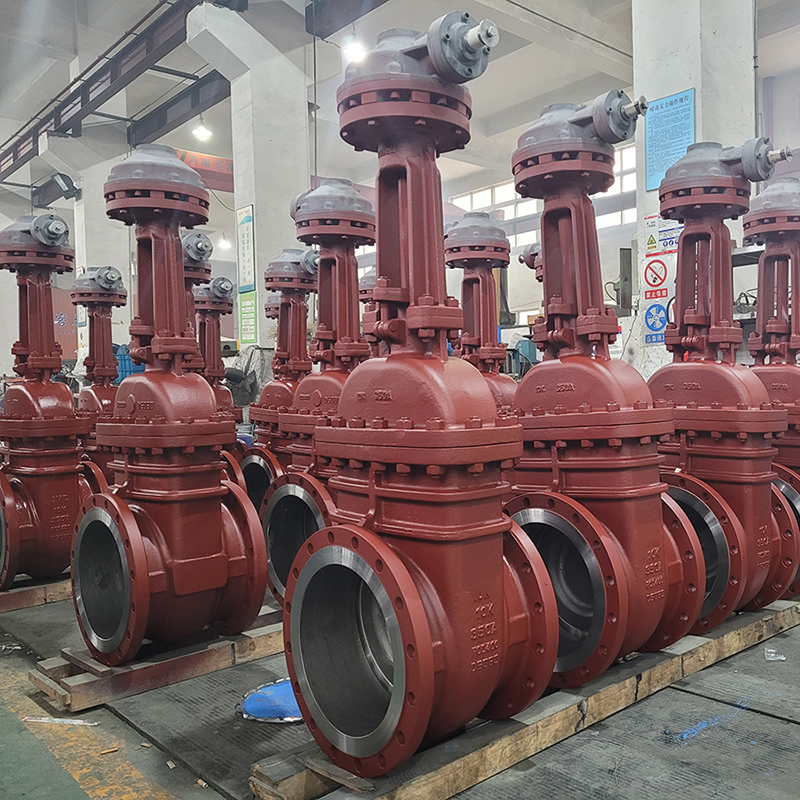
1. Carbon Steel Gate Valve (Isolation Service)
A Carbon Steel Gate Valve uses a wedge-shaped disk that moves linearly to open or close the flow path. When fully open, the gate retracts completely, producing near-zero pressure drop.
- Standards: API 600 (cast), API 602 (forged), ASME B16.34
- Best for: Main steam isolation, crude oil transmission, feedwater systems
- Avoid if: Throttling is required – partial opening causes vibration and seat erosion
2. Carbon Steel Globe Valve (Throttling and Flow Control)
A carbon steel globe valve features a plug disk that moves perpendicular to the seat, offering excellent throttling accuracy. The flow path changes direction internally, which creates higher pressure drop but enables precise regulation.
- Standards: BS 1873, API 623
- Best for: Boiler blowdown, steam turbine bypass, chemical dosing
- Avoid if: Minimum pressure drop is critical
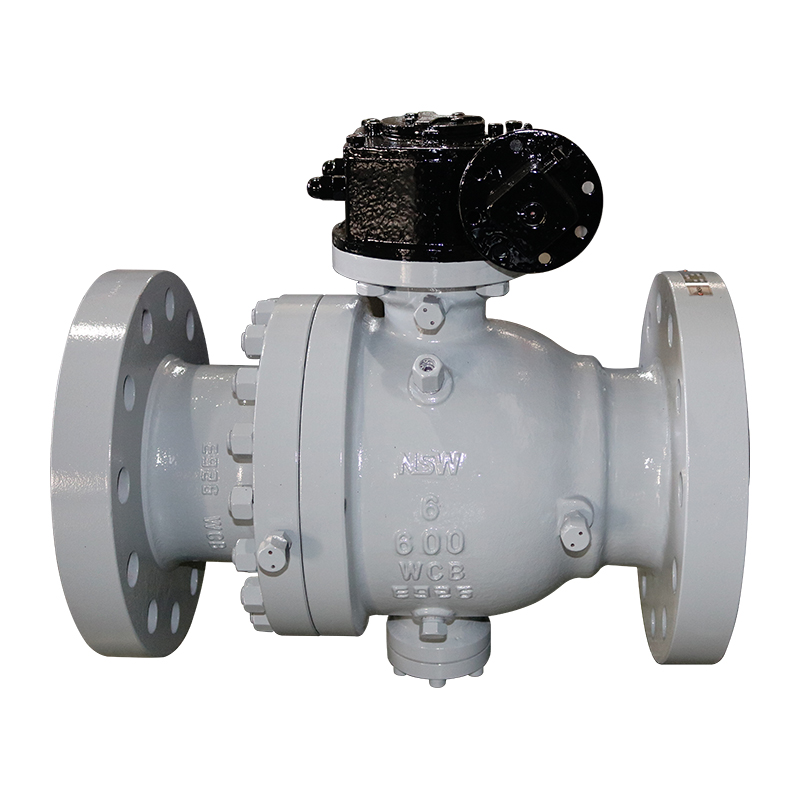
3. Carbon Steel Ball Valve (Rapid Shutoff and High-Pressure Gas)
A Carbon Steel Ball Valve uses a spherical disk with a through-bore. A quarter-turn (90°) operation provides fast, bubble-tight shutoff. Available in floating (≤DN200) and trunnion-mounted (≥DN200) designs.
- Standards: API 6D, API 608, BS 5351
- Best for: Gas transmission, emergency shutdown (ESD) systems, hydrocarbon manifolds
- Pressure capability: Up to ASME Class 2500 / API 10,000 psi
4. Carbon Steel Check Valve (Backflow Prevention)
A carbon steel check valve automatically prevents reverse flow using a swinging disk, dual-plate wafer, or piston lift mechanism. Carbon steel construction provides resistance to pressure surges and water hammer.
- Standards: API 6D, BS 1868
- Best for: Boiler feed pump discharge, turbine extraction, compressor discharge
- Avoid if: Rapid cycling causes slamming – specify dampened or nozzle-type check valves instead
5. Carbon Steel Butterfly Valve (Large-Diameter Flow Control)
A carbon steel butterfly valve uses a rotating disk to regulate or isolate flow. High-performance triple-offset designs with metal-to-metal seats offer bidirectional bubble-tight shutoff at elevated temperatures.
- Standards: API 609, AWWA C504
- Best for: Cooling water, large-diameter gas lines, district heating
- Pressure limit: Typically Class 150 to 600 (higher classes available in triple-offset)
Where to Use Each Carbon Steel Valve Type – Application Matrix
| Valve Type | Primary Function | Pressure Class | Typical Media |
|---|---|---|---|
| Gate | On/Off isolation | 150–2500 | Steam, oil, gas, water |
| Globe | Throttling/control | 150–1500 | Boiler water, steam bypass |
| Ball | Fast shutoff | 150–2500 | Natural gas, crude, ESD |
| Check | Backflow prevention | 150–2500 | Pump discharge, compressor |
| Butterfly | Regulation/isolation | 150–600 | Cooling water, air, gas |
WCB vs A105 – Cast vs Forged, When to Choose Which
This is one of the most frequent questions from procurement teams. Both WCB and A105 are carbon steel, but they are not interchangeable.
| Criterion | A216 WCB (Cast) | A105 (Forged) |
|---|---|---|
| Form | Castings | Forgings |
| Typical size | ≥2″ valves | ≤2″ valves, flanges, fittings |
| Pressure rating | Up to Class 2500 | Up to Class 2500 (better impact resistance) |
| Weldability | Good (preheat often required) | Excellent |
| Porosity risk | Higher (casting defects) | Minimal (wrought structure) |
| Cost per kg | Lower | Higher (due to forging process) |
| Lead time | Longer (pattern making) | Shorter (stocked bar stock) |
Rule of thumb:
- Specify A105 for small-bore, high-pressure, or critical services where casting porosity is unacceptable.
- Specify WCB for large-diameter, standard-pressure valves where cost and availability drive decisions.
Operating Limits: Pressure, Temperature, and Sour Service (NACE MR0175)
Pressure-Temperature Limits (ASME B16.34)
Carbon steel grades WCB and A105 are rated from –29°C to 425°C. At 425°C, the maximum allowable working pressure drops to approximately 70% of the Class 150 rating. Always consult the ASME B16.34 pressure-temperature table for exact values.
Critical temperature warnings:
- Above 425°C: Standard carbon steel undergoes graphitization – carbide phases decompose, reducing strength. Switch to chrome-moly (ASTM A217 WC6/WC9).
- Below –29°C: Standard grades become brittle. Use LCC/LCB (cast) or LF2 (forged) with verified Charpy impact values.
NACE MR0175 / ISO 15156 for Sour Service
For environments containing wet H₂S, carbon steel valves must meet:
- Hardness limit: ≤22 HRC (for all pressure-containing parts)
- Heat treatment: Stress relief or normalizing + tempering
- Trim materials: At least 316 SS for stems and balls; avoid hard-facing alloys with >1% nickel in sour service
5 Common Failure Modes of Carbon Steel Valves (and How to Avoid Them)
Carbon Steel vs Stainless Steel vs Cast Iron – Cost & Performance Comparison
| Feature | Carbon Steel (WCB/A105) | Stainless Steel (CF8M/316) | Cast Iron (A126) |
|---|---|---|---|
| Yield Strength | High (250–290 MPa) | Moderate (205–240 MPa) | Low (160–200 MPa) |
| Max Temp | 425°C | 815°C | 230°C |
| Corrosion Resistance | Low (needs coating) | Excellent | Poor |
| Seawater Suitability | Poor | Fair (pitting risk) | Very Poor |
| Pressure Class | 150–2500+ | 150–2500+ | 125–250 |
| Relative Cost (per kg) | 1.0× | 2.5× – 3.5× | 0.4× – 0.6× |
Selection rule:
- Choose carbon steel for non-corrosive oil, gas, steam, and water at high pressure.
- Choose stainless steel for acids, chlorides, or high-temperature oxidizing services.
- Choose cast iron only for low-pressure, non-critical water/air services where cost is the sole driver.
Procurement Checklist for Carbon Steel Valves (with MTR Tips)
Use this list when qualifying suppliers and inspecting deliveries:
- ✓
ASTM grade confirmed – WCB for standard, WCC for higher strength, LCC/LF2 for low temp.
- ✓
ASME pressure class – Verify class (150–2500) matches nameplate.
- ✓
End connections – RF, RTJ, BW, or NPT – ensure complement with piping spec.
- ✓
EN 10204 3.1 MTR – Check chemistry (C, Mn, Si, P, S), tensile, yield, and impact values.Red flag: Missing impact test for low-temp grades.
- ✓
NACE MR0175 – Confirm hardness ≤22 HRC and heat treatment records.
- ✓
Hydrostatic test – Per API 598 or EN 12266-1, with hold time and pressure recorded.
- ✓
Seat leakage test – Specify allowable leakage rate (e.g., ISO 5208 Rate A for bubble-tight).
FAQ – Carbon Steel Valve Selection (Engineers & Procurement)
Q1: What is the maximum temperature for a carbon steel valve WCB?
A: Continuous service up to 425°C (800°F). Above that, graphitization occurs – use chrome-moly WC6/WC9.
Q2: Can I use a carbon steel ball valve for seawater?
A: Not recommended. Seawater causes rapid pitting and galvanic corrosion. Use aluminum bronze or duplex stainless steel instead.
Q3: What is the difference between ASTM A105 and A216 WCB?
A: A105 is forged (used for small-bore, high-pressure valves and fittings); WCB is cast (used for large-diameter valve bodies). Both have similar temperature and pressure limits.
Q4: Are carbon steel valves NACE compliant?
A: Only if specified and heat-treated to ≤22 HRC. Standard WCB/A105 without stress relief is not NACE-compliant for sour service.
Q5: Which carbon steel valve type is best for throttling?
A: Globe valve. Gate and ball valves are not designed for throttling and will suffer seat damage.
Summary & Next Steps
A carbon steel valve offers the best combination of strength, thermal endurance, and cost for non-corrosive industrial services. Whether you need a carbon steel gate valve for main isolation, a carbon steel globe valve for precise flow control, a Carbon Steel Ball Valve for fast emergency shutdown, a carbon steel check valve for backflow prevention, or a carbon steel butterfly valve for large-diameter regulation, the key is matching the ASTM grade, pressure class, and trim material to your actual service conditions.
For procurement: Always validate MTRs, NACE certificates, and test reports. A missing impact test or hardness value can lead to catastrophic failure in cold or sour service.
For engineers: When in doubt between cast and forged, or carbon vs stainless, refer to the comparison tables above – and always check the ASME B16.34 pressure-temperature table for your specific design conditions.
Post time: Sep-07-2026