


Field technicians run into this all the time. You show up to cycle a valve that’s sat closed for months or even years, and the handwheel just won’t budge. The stem stays locked solid, and even slipping on a cheater bar delivers zero movement. The first instinct for many crews is to crank harder. This is where trouble starts. We’ve seen countless cases where brute force bends valve stems, scores sealing faces or cracks handwheels. Most of the time, the valve itself hasn’t failed. After sitting static for a long stretch, rust, hardened packing, crystallized process media and dried lubrication lock moving parts together. Take time to pinpoint what’s binding before applying force — it saves far more downtime than rushing it.

Before You Apply Force A gate or globe valve stem is deliberately designed as the weakest link in the torque path. If the stem shears, the valve cannot be closed again — and on a live line that means an uncontrolled release. Never use a cheater bar, a pipe extension, or a wrench longer than the one supplied with the valve. If the handwheel will not move under a firm two-handed pull, the problem is mechanical, not muscular — stop and diagnose. Likewise: do not heat a valve body with an open flame, do not strike the body or bonnet to “break it loose,” and never leave a gate valve throttled in a partially open position to relieve sticking. Each of these converts a recoverable seizure into a permanent failure.
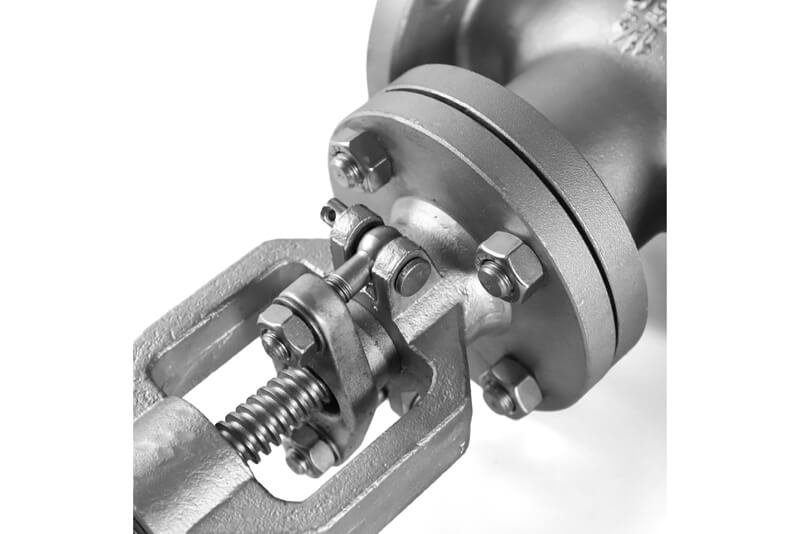
1. Seizure Between Valve Stem and Stuffing Box
This is by far the most common sticking point.
The stem connects the handwheel or actuator to the closure member, wrapped tightly by sealing packing inside the stuffing box. This interface tends to bind first when a valve stays shut for a long time.
• Rust adhesion. Most stems are metallic. If process fluid carries moisture or corrosive components, the section where stem rubs against packing oxidizes and rusts. Rust fills the tiny clearance and glues the stem to packing, locking rotation or preventing vertical stem travel.
• Aging and hardening of packing. Packing gets squeezed nonstop, exposed to heat and chemical attack from process media. Over time it loses elasticity and turns rigid. It clamps tight around the stem and creates high static friction.
• Crystalline deposits from process media. If the fluid contains salts or other crystallizing ingredients, solids build up in the narrow gap around packing. Those crystals form a hard crust and jam the stem.
Field diagnosis: The handwheel might spin freely while the stem stays fixed, or the whole handwheel refuses to rotate at all. Once you loosen the packing gland, you will usually spot rust on the stem or hardened packing. Light surface rust can be cleaned out and new packing fitted. If the stem is heavily pitted or bent, stem replacement is the only reliable fix.
This stem–packing seizure is the single most common cause on rising-stem API 600 gate valves left closed on isolation duty.
2. Seizure at Disc and Seat Sealing Surfaces
Sticking at the core sealing section of the valve
When a valve stays fully closed, disc and seat remain pressed tightly together continuously. Media trapped in that thin gap can slowly bond the two surfaces together.
• Rust and mineral scaling. Oxygen and moisture corrode metallic sealing faces. If the fluid carries calcium and magnesium ions, limescale builds up and makes the bond even harder to break.
• Foreign debris trapped between sealing faces. Weld slag, sand and metal chips left in the pipeline before shutdown get pinched between seat and disc. Left undisturbed, these hard particles wedge in and lock the disc.
• Thermal deformation of the disc. This happens often on high-temperature steam or hot process lines. Uneven heating creates thermal stress, slightly warping the disc until it forms an interference fit against the seat.
Field diagnosis: The handwheel turns and the stem moves, yet the valve never reaches full open stroke. Once disassembled, scale, rust or trapped debris will be visible on sealing surfaces. Light scaling can be cleaned and lapped on site. If the disc or seat has deep scoring or permanent deformation, swap out the trim set. Seat bonding shows up most often on trunnion-mounted ball valves in hydrocarbon service and on soft-seated butterfly valves in cooling water loops, where trapped media sits against the seat for months.
3. Loss of Lubrication
Sharp increase in friction on moving components.
Moving assemblies including stem threads, gear drives and bearings rely on lubrication. Lubrication can fail when the valve remains closed for an extended period.
• Lubricant drying and depletion. For media-lubricated valves, the oil film dissipates and evaporates without continuous flow. Special grease will dry and cake after long static storage, which greatly increases friction resistance.
• Seized thread pairs due to corrosion. If stem and bonnet threads lack proper protection, moisture from the air or minor media leakage causes thread rust. Rust fills thread gaps and creates a locked thread connection, preventing the stem from rotating or lifting.
Field diagnosis: The handwheel turns with heavy resistance or gets stuck at a certain position. Cleaning the threads and reapplying lubricating grease usually restores normal operation. Severely corroded threads require repair or stem replacement. On forged steel gate valves with exposed stem threads, thread corrosion is more common than seat damage as the reason a valve will not open.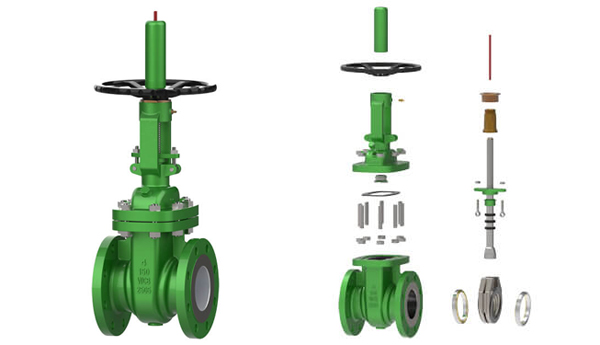
Shutdown and Storage Practice: Preventing the Next Seizure
Nearly every case in this article began with the same decision: a valve was closed and then forgotten. Six habits prevent it.
1. Commission with a baseline. Record the opening torque at installation. Without a baseline you cannot tell “normal resistance” from “seizing.”
2. Exercise on a schedule. Full stroke, quarterly minimum. Log the date and the operator — an unlogged exercise did not happen.
3. Put idle valves in the right position. Ball and plug valves open; gate and globe fully open or fully closed. Never store a wedge gate partly open.
4. Protect the stem. Fit a stem cover or guard on outdoor and washdown installations. Rain and process spillage are what rust the packing interface.
5. Drain trapped media. Before a long shutdown, drain and, where the specification allows, flush the body cavity. Crystallizing and scaling media are the main source of bonded seats.
6. Re-grease on a calendar, not on failure. Stem threads and gearboxes once a year — the grease dries whether the valve is used or not.
4. Impacts from External Conditions and Operating Mechanisms
Even if the valve internals are intact, external factors can stop the valve from opening
• Physical binding from external force. Fallen insulation layers, construction waste accumulated around the valve, or vibration-induced binding between the valve, support and pipeline creates external resistance.
• Operating mechanism malfunction. Handles, handwheels and gearboxes exposed outdoors tend to corrode. Sheared pins and keys or excessive gear backlash disable the mechanism: the handwheel spins but cannot drive the disc.
Field diagnosis: First check for debris jamming around the valve, confirm reliable connection between handwheel and stem, and inspect the gearbox. Most faults of the operating mechanism can be identified externally without valve disassembly. Gearbox and key failures are most frequent on BS 1873 globe valves and large butterfly valves, where the operating torque is highest.
Quick Diagnostic Table: Symptom → Cause → First Action
|
What you observe |
Most probable cause | First action |
Do not do |
| Handwheel will not turn at all; stem motionless | Stem–packing seizure, or rusted stem threads | Back off gland nuts half a turn, apply penetrating oil, wait 30 min | Force the handwheel |
| Handwheel spins freely, stem does not move | Sheared key or pin, stripped gear, disconnected handwheel | Inspect coupling, key and gearbox externally | Disassemble the valve |
| Handwheel turns but valve never reaches full stroke | Seat/disc adhesion, scale, trapped debris, thermal distortion | Cycle gently back and forth to break the bond | Keep cranking past the stop |
| Turns with heavy, even resistance throughout | Dried lubricant on stem threads or bearing | Clean threads, re-grease with MoS2 grease | Assume the seat is worn |
| Resistance increases only near the closed position | Seat interference, swollen packing, thermal binding | Loosen gland, inspect seat faces | Lap the seat before checking packing |
| Valve moves but leaks at the stem afterwards | Packing disturbed during freeing | Re-torque gland per manufacturer’s table | Over-tighten to stop the leak |
5. On-site Troubleshooting Sequence: Outside In, Simple Checks First
When a long-closed valve refuses to open, follow this inspection sequence. Do not disassemble the valve immediately.
• Step 1: Inspect the exterior.
Clear debris around the valve, confirm secure connection between handwheel and stem, and check for missing keys or damaged gearbox parts. External faults carry the lowest repair cost.
• Step 2: Check the operating mechanism.
Test whether the handwheel rotates smoothly and whether the stem rotates along with it. If the handwheel spins but the stem stays stationary, the fault lies in the coupling or thread assembly.
• Step 3: Locate the seizure point.
If the handwheel will not turn at all, the issue is usually stem-packing seizure or corroded threads. If the handwheel rotates but the valve cannot fully open, sealing surface adhesion or jammed disc is likely.
• Step 4: Targeted handling.
For packing seizure, slowly loosen the packing gland and inject lubricant. Clean corroded threads and apply fresh grease. For bonded sealing faces, try gentle repeated cycling to release adhesion; disassemble for maintenance if this fails.
• Step 5: Preventive measures.
Exercise idle valves regularly. Keep the stem properly lubricated. Install protective covers where possible to avoid external corrosion and debris buildup.
Reference Values for Field Work
These are the figures our engineering team works to. Always confirm against the valve’s own data sheet before applying them in the field.
| Parameter | Reference value | Why it matters |
| Stem surface finish | Ra ≤ 0.2–0.4 µm (ground and burnished) | Ra ≤ 0.2–0.4 µm (ground and burnished) |
| Rough stems grip packing and re-seize after the first cycle | Stem thread lubricant | MoS2 (molybdenum disulphide) grease, NLGI | Dry graphite or oil films evaporate within months on idle valves |
| Gland bolt re-torque | Per nameplate / IOM table; re-check after first heat-up and each 6 months | Under-torque leaks; over-torque is a top cause of “stiff” valves |
| Recommended cycling interval | Quarterly minimum; monthly for safety-critical and standby isolation valves | A valve that never moves becomes a valve that cannot move |
| Storage position | Ball and plug: fully open. Gate and globe: fully open or fully closed, never throttled | Avoids trapped media freezing against the seat and avoids seat erosion |
6. Conclusion
Most of these seizures are not failures of the valve but of the interval between operations. Inspect from the outside in, test the simple causes first, and schedule disassembly only when the external checks come back clean. If you need help identifying the trim set, packing specification or replacement component for a valve that will not open, send us the tag number, size, pressure class and body material through our contact page — we will confirm the correct configuration before you commit to a shutdown.
FAQ:
How much force is safe on a stuck valve handwheel?
Use the force the valve was designed for — roughly the pull of one operator on the supplied handwheel or wrench. If that is not enough, the cause is mechanical. A cheater bar multiplies torque past the stem’s design limit and shears the stem, which turns a stuck valve into an uncloseable one.
Can I loosen the packing gland while the line is still pressurized?
Yes, in small increments, if the process allows it and you stay clear of the gland. Back off the nuts about half a turn, work the handwheel, then re-tighten. Never remove the gland follower under pressure — that creates a direct release path.
Why does a valve seize after long shutdown but work fine in normal service?
Continuous movement keeps the stem–packing interface polished and the lubricant distributed. Once the valve stops moving, rust, hardened packing and crystallized media fill the clearance. Nothing “wears out” — the clearance is simply filled.
Should I cycle a valve that has been closed for years before putting the line back in service?
Yes, and before pressurizing. A valve that cannot be stroked cold will almost certainly not stroke hot, and hot seizure is far harder to recover from.
How do I tell whether the problem is the actuator or the valve?
Isolate the two. Remove the actuator coupling and turn the stem by hand: if the stem moves, the fault is in the actuator, gearbox or key; if it does not, the fault is inside the valve. This takes ten minutes and prevents replacing the wrong component.
Reviewed by the NSW Valve engineering team, Wenzhou Newsway Valve Co., Ltd.
20+ years of valve manufacturing; ISO 9001, PED/CE and API 607 certified;
API 6D certification in progress. Field support for gate, globe, ball, butterfly and check valves from NPS ½” to 36″ (DN15–DN900), ASME Class 150–2500.
Post time: Nov-07-2026