


A Practical Guide for Engineers and Buyers
By David Chen, Senior Application Engineer at NSW Valve
Technical review by NSW Valve Engineering Department
Last updated: September 2026
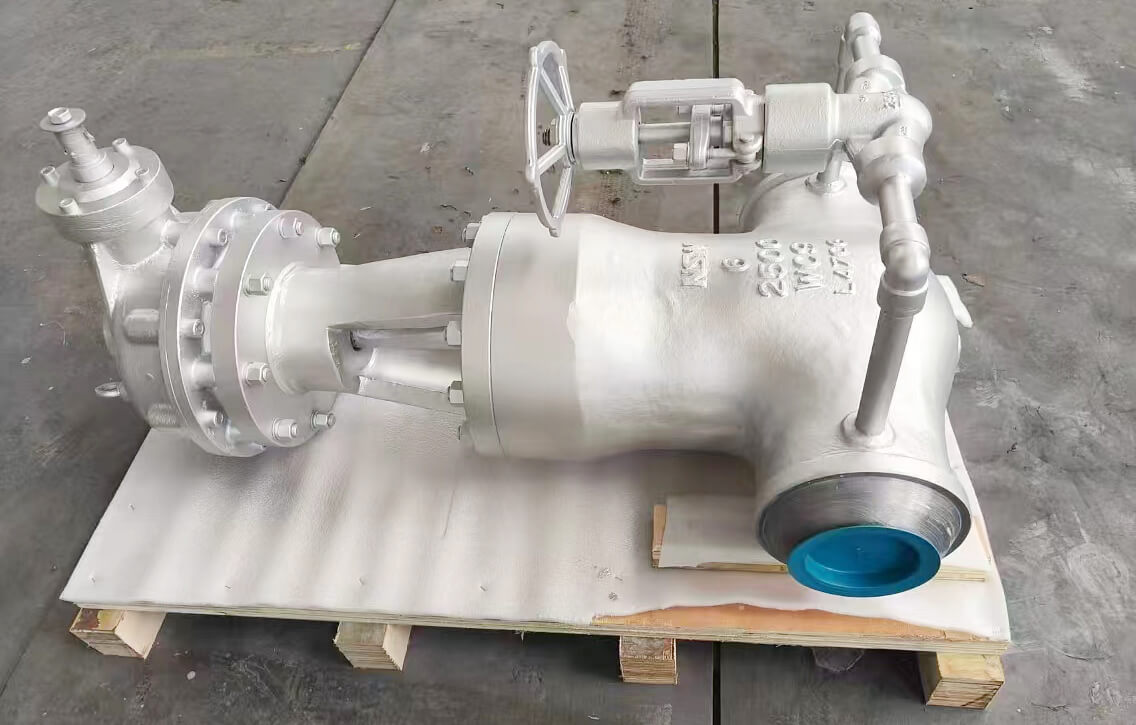
Class 2500 is the highest standard pressure class in API 600. Material selection decides whether the valve survives high pressure, high temperature, and corrosive service. This guide gives you the short version — what to choose, and why — based on NSWValve’s manufacturing and field data.
> For complete API 600 gate valve specifications, visit our API 600 Gate Valve product page.
1. Start with Temperature
Temperature is the first filter. It determines the body material.
| Body Material | ASTM | Temperature Range | Used For |
|---|---|---|---|
| WCB | A216 WCB | -29°C to 425°C | General high-pressure steam, water, sweet oil |
| WC6 | A217 WC6 | -29°C to 593°C | Power plant steam, high-temp process |
| WC9 | A217 WC9 | -29°C to 593°C | Main steam, hydrogen service |
| C12A | A217 C12A | Up to 650°C | Ultra-supercritical steam |
| CF8M | A351 CF8M | -196°C to 538°C | Corrosive media, acids, chlorides |
| LCB/LCC | A352 | -46°C to 340°C | Low-temperature service |
| Duplex 2205 | A995 GR.4A | -46°C to 315°C | Sour service, seawater |
Rule of thumb:
• Below 425°C → WCB
• 425–593°C → WC6 or WC9
• Above 593°C → C12A
• Corrosive media → CF8M or Duplex Stainless Steel
Why it matters: Class 2500 is not the same pressure rating for every material. CF8M has a lower allowable pressure at high temperature than WCB. Always check the ASME B16.34 P-T curve.
From NSW Valve’s records: About 70% of Class 2500 gate valve inquiries for power plants specify WC6 or WC9. In one case, a power station used WCB for a 540°C main steam line. After 18 months, wall thickness dropped below the minimum. We replaced it with WC9, and the valve has run for 5 years without similar issues.
2. Then Check Corrosion
If the medium contains H₂S, CO₂, chlorides, or acids, carbon steel is not enough.
• Sour service (H₂S): Use NACE MR0175/ISO 15156 compliant materials. Typically WCB with Inconel 625 overlay, or CF8M with hardness below 22 HRC.
• Seawater / chlorides: CF8M or Duplex 2205.
• Strong acids: Hastelloy C-276 or similar nickel alloy.
For procurement: always ask for NACE compliance certificates if the valve is for sour service.
NSW Valve note: In sour service, bolting is often overlooked. We require NACE-compliant bolting (B7M or B8M Class 2) with hardness test reports. Without this, the valve may fail even if the body and trim are correct.
3. Trim Selection
Trim is the sealing and wear surface — disc, seat, stem. API 600 standardizes trim numbers.
| Trim | Material | Best For |
|---|---|---|
| 1 | 13Cr | General non-corrosive service |
| 5 | Stellite hard-faced | High-temperature steam, erosion |
| 8 | Monel 400 | Seawater, brine |
| 12 | 13Cr + Stellite | Sour service, NACE compliant |
Simple guide:
• Standard service → Trim 1
• High-temp steam → Trim 5
• Seawater → Trim 8
• Sour gas → Trim 12
NSW Valve Trim 5 data: We use Stellite 6 plasma overlay. Deposit thickness is 2.0–2.5 mm (minimum 1.6 mm after finishing). Hardness is 40–43 HRC. In our 600°C steam erosion tests, Stellite 6 lasted 35% longer than a lower-grade hardfacing from another supplier. For Class 2500 steam service, Trim 5 is the standard.
4. Procurement Checklist
Before accepting a quotation for a Class 2500 gate valve, verify these four points:
1. P-T rating — Confirm the material is rated for your actual pressure and temperature, not just “Class 2500.”
2. Material certificates — Mill certs for body, bonnet, stem, and trim. Trace heat numbers.
3. NACE compliance — If sour service, require hardness and chemistry reports for all wetted parts, including bolting.
4. Trim verification — For Trim 5, ask for Stellite deposit thickness and hardness results.
5. Quick Decision Flow (NSW 4-Step Framework)
1. Max temperature? → Pick body material.
2. Corrosive media? → Upgrade to stainless or alloy.
3. Erosion? → Use Stellite hard-facing.
4. Sour service? → NACE compliance + Trim 12.
If any answer is unclear, choose the more conservative material. At Class 2500, a wrong material choice is far more expensive than a material upgrade.
Conclusion
For API 600 Class 2500 gate valves:
• WCB covers most general high-pressure service up to 425°C.
• WC6/WC9 handle high-temperature steam up to 593°C.
• CF8M is for corrosive media, but check the P-T derating.
• Trim 5 for steam, Trim 8 for seawater, Trim 12 for sour gas.
Engineers should verify the actual P-T rating. Buyers should demand material traceability and NACE certificates where required.
> Need a Class 2500 gate valve?
NSW Valve manufactures API 600 gate valves in Class 150–2500, with WCB, WC6, WC9, CF8M, LCB/LCC, and Duplex 2205. Custom trims and NACE-compliant options available.
View API 600 Gate Valve Specifications →
About the author
David Chen is a Senior Application Engineer at NSW Valve with 12 years of experience in valve selection for power, oil & gas, and chemical projects. He has supported over 200 valve sourcing projects across Asia, Europe, and North America.
Technical review
This guide was reviewed by the NSW Valve Engineering Department. All material data and selection criteria reflect ASME B16.34, API 600, and NACE MR0175/ISO 15156 requirements, plus NSW Valve internal testing and field records.
Last updated: September 2026
Technical specifications are subject to change without notice. Contact our engineering team for application-specific recommendations.
Post time: Sep-28-2026